
Astaxanthin Market Overview
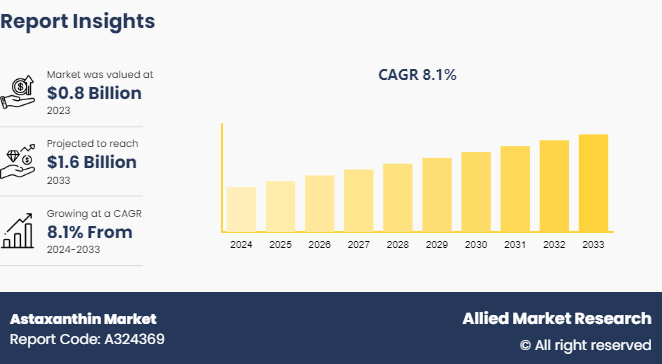
The global astaxanthin market was valued at $0.8 billion in 2023, and is projected to reach $1.6 billion by 2033, growing at a CAGR of 8.1% from 2024 to 2033. Growing awareness of health and wellness, increasing demand for natural antioxidants, and expanding applications in nutraceuticals, cosmetics, and pharmaceuticals are the major factors driving the astaxanthin market growth.
Market Size & Future Outlook
- 2023 Market Size: $0.8 billion
- 2033 Projected Market Size: $1.6 billion
- CAGR (2024-2033): 8.1%
- North America: Largest market in 2023
- Asia Pacific: Fastest growing market
Market Introduction and Definition
Astaxanthin market refers to the comprehensive ecosystem of products, ingredients, and technologies centered on the production, formulation, and distribution of astaxanthin, a powerful carotenoid known for its antioxidant properties. It encompasses a wide range of natural and synthetic astaxanthin derivatives used in dietary supplements, functional foods, beverages, cosmetics, and animal feed applications. The market also includes encapsulated forms, oleoresins, and formulations designed to enhance bioavailability and efficacy.
The astaxanthin market plays a significant role in promoting human health, improving skin appearance, and supporting cardiovascular, eye, and immune system health. It aids in combating oxidative stress, inflammation, and age-related cellular damage. Technological advancements such as microencapsulation, fermentation-based production, and extraction from microalgae have transformed the market, enabling high-purity, sustainable, and bioavailable products. These innovations facilitate easier integration into supplements, functional foods, and cosmetic formulations.
The market serves both therapeutic and cosmetic purposes, with increasing demand for anti-aging skincare, sports nutrition, and preventive healthcare products. Growing consumer preference for natural ingredients, rising disposable income, and expanding awareness of antioxidant benefits further contribute to market expansion. In addition, research and development in bioengineering, novel formulations, and delivery systems enhance product efficacy and market penetration, strengthening the overall growth and adoption of astaxanthin across global nutraceutical, pharmaceutical, and personal care industries.
Key Takeaways
- The astaxanthin market size covers 20 countries. The research includes a segment analysis of each country in terms of value ($Million) for the projected period 2023-2032.
- More than 1, 500 product literatures, industry releases, annual reports, and other such documents of major astaxanthin industry participants along with authentic industry journals, trade associations' releases, and government websites have been reviewed for generating high-value industry insights.
- The study integrated high-quality data, professional opinions and analysis, and critical independent perspectives. The research approach is intended to provide a balanced view of global markets and to assist stakeholders in making educated decisions in order to achieve their most ambitious growth objectives.
Key Market Dynamics
The astaxanthin market is evolving rapidly, driven by growing health awareness, rising demand for natural antioxidants, and expanding applications in nutraceuticals, cosmetics, and pharmaceuticals.
Drivers
Increasing prevalence of lifestyle-related health issues such as oxidative stress, inflammation, cardiovascular problems, and age-related cellular damage is a major factor propelling the astaxanthin market. Sedentary lifestyles, unhealthy diets, and rising chronic disease incidence contribute significantly to the demand for antioxidant-rich supplements and functional foods. Moreover, growing consumer preference for preventive healthcare and natural ingredients encourages regular intake of astaxanthin-containing products.
Rising demand for anti-aging and skin health products further accelerates market growth. Astaxanthin’s potent antioxidant properties, ability to reduce skin wrinkles, protect against UV damage, and improve skin elasticity make it highly attractive in cosmetics and personal care formulations. Technological advancements, including microencapsulation, fermentation-based production, and extraction from microalgae, enhance purity, bioavailability, and sustainability, driving adoption among manufacturers and end-users. In addition, increasing incorporation of astaxanthin in animal feed, especially for aquaculture, poultry, and livestock, supports market expansion by improving coloration, immunity, and overall health of farmed species.
Opportunities
Integration of astaxanthin with functional beverages, sports nutrition products, and pharmaceutical formulations offers significant growth potential. Research in novel delivery systems, higher bioavailability formulations, and synergistic blends with other antioxidants opens avenues for premium product development. Growing awareness campaigns about oxidative stress, skin health, and immune support further expand consumer education and adoption globally. Emerging markets with rising disposable income and preference for natural dietary supplements present additional opportunities for market players.
Restraints
High production costs of natural astaxanthin, especially from microalgae, limit widespread adoption in price-sensitive regions. Dependence on specialized cultivation, extraction, and purification processes increases operational expenses. Regulatory challenges, inconsistent quality standards, and limited consumer awareness in certain regions may hinder market growth. In addition, competition from synthetic carotenoids and other antioxidants poses challenges for natural astaxanthin producers during the forecast period.
Astaxanthin Market Segmentation Overview
The astaxanthin market is segmented into source, form, application, and region. On the basis of source, the market is categorized into natural and synthetic. On the basis of form, the market is categorized into dry and liquid. On the basis of application, the market is divided into dietary supplements, cosmetics and others. Region wise, the market is analyzed across North America, Europe, Asia-Pacific, and LAMEA.
Regional/Country Market Outlook
North America accounted for a major astaxanthin market share owing to the presence of several major players, consumers in North America are increasingly aware of the health benefits associated with antioxidants like astaxanthin. This heightened health consciousness drives demand for dietary supplements and functional foods that contain astaxanthin. The region has a well-established and rapidly growing market for dietary supplements.
Asia-Pacific astaxanthin market size is estimated to grow at the highest CAGR during the forecast period, owing to the lucrative opportunities for the astaxanthin key players, owing to a rise in awareness about health awareness. Another factor driving the growth of the market is the focus of major players on technological advancements in astaxanthin.
Industry Trends
- Consumers are increasingly favoring natural and organic products over synthetic ones. This astaxanthin market trends is driving the demand for natural astaxanthin derived from sources such as microalgae and yeast.
- Innovations in extraction and production technologies are improving the yield and quality of astaxanthin.
Key End-User Segments Fueling Market Growth
The astaxanthin market is driven by several primary end-user segments. Dietary supplement manufacturers represent the largest end-user segment, utilizing astaxanthin for its potent antioxidant properties in capsules, soft gels, tablets, and functional powders. These manufacturers serve health-conscious consumers seeking products that support cardiovascular health, immune function, eye health, and anti-aging benefits. Growing interest in preventive healthcare, combined with increasing awareness of oxidative stress and inflammation, has encouraged the adoption of astaxanthin-based supplements globally.
Cosmetic and personal care companies contribute significantly to market demand. Astaxanthin’s ability to protect against UV damage, reduce wrinkles, and improve skin elasticity makes it highly attractive for anti-aging creams, serums, lotions, and other skincare products. Formulations combining astaxanthin with other natural antioxidants, peptides, or hyaluronic acid are increasingly popular among consumers seeking high-efficacy, natural cosmetic solutions.
Functional food and beverage manufacturers represent another vital segment, incorporating astaxanthin into fortified drinks, protein shakes, snacks, and dairy products. As consumers increasingly seek functional nutrition that combines convenience with health benefits, astaxanthin-enriched foods are gaining traction. Its natural reddish-orange pigment also appeals to manufacturers looking for clean-label coloring alternatives in addition to health benefits.
Animal feed and aquaculture industries are crucial end-users of astaxanthin. In aquaculture, astaxanthin improves the coloration, growth, and immunity of farmed salmon, trout, and shrimp. Poultry and livestock applications include pigmentation enhancement in egg yolks and meat, as well as overall animal health support.
Research institutions and contract manufacturers also influence the market. Academic studies on astaxanthin’s therapeutic potential for neuroprotection, anti-inflammatory effects, and sports nutrition applications drive innovation. Private-sector research, often in partnership with universities, focuses on enhancing extraction efficiency, bioavailability, and formulation versatility. These initiatives support product diversification and commercial scalability.
Patent Analysis for the Astaxanthin Market
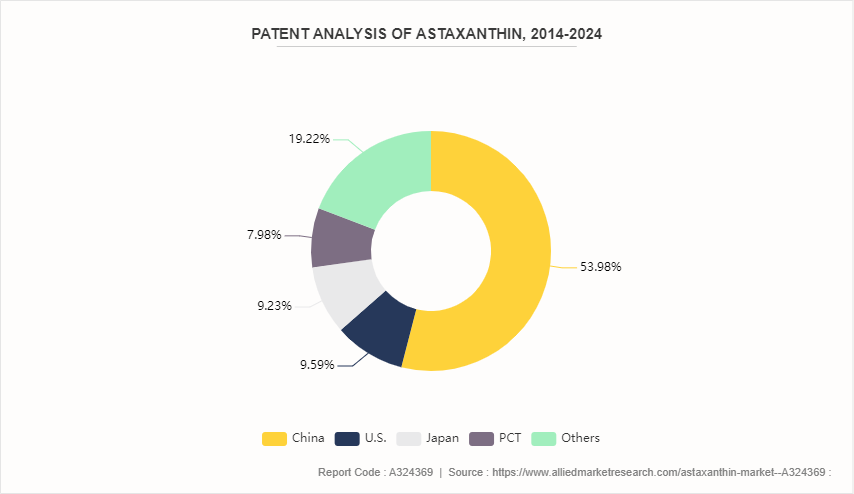
According to patent data from the World Intellectual Property Organization (WIPO) between 2022 and 2024, China accounted for approximately 34% of global astaxanthin-related patents, followed by the U.S. at 22%. The European Patent Office represented 12%, while Japan contributed 10%, with other countries such as South Korea and India making up the remainder. Patent activity primarily focuses on microalgae cultivation methods, fermentation techniques, high-purity extraction, encapsulation technologies, and novel formulation processes. China’s strong patent output highlights its expanding production capabilities, whereas the U.S. and Europe lead in high-value, research-driven applications such as nutraceuticals, pharmaceuticals, and functional cosmetics.
Impact of Evolving Consumer Preferences on Astaxanthin Market Trends
Consumer preferences are playing a pivotal role in shaping trends within the astaxanthin market. One significant shift is the growing demand for natural, clean-label, and plant-based antioxidant products. Consumers increasingly prefer ingredients derived from microalgae or natural sources rather than synthetic alternatives, driving investments in sustainable and high-bioavailability formulations.
Health and wellness trends also drive demand for multi-functional products. Customers seek astaxanthin not only for general antioxidant support but also for targeted benefits such as skin health, eye protection, sports performance, and cardiovascular support. Functional beverages, dietary supplements, and beauty-from-within formulations are gaining popularity as consumers adopt holistic health routines.
Convenience and ready-to-use formats further influence market dynamics. Soft gels, effervescent tablets, powders, and pre-mixed functional drinks meet consumer demand for easy integration into daily routines. Digital platforms and e-commerce have amplified access to premium astaxanthin products, allowing smaller brands to compete with established players.
Sustainability and ethical sourcing are increasingly important to consumers. Companies that emphasize eco-friendly production, renewable microalgae cultivation, and traceable supply chains gain a competitive edge. In addition, transparency in labeling, certifications, and clinical-backed claims influence purchasing decisions and brand trust.
Technological integration also shapes market trends. Advanced extraction, microencapsulation, and formulation technologies improve stability, bioavailability, and synergistic effects with other nutrients. These innovations allow manufacturers to develop higher-efficacy products while minimizing dosage requirements. Personalized nutrition trends, supported by digital health platforms, encourage tailored astaxanthin formulations based on individual health goals.
Overall, evolving consumer preferences continue to redefine product development, marketing strategies, and technology adoption in the global astaxanthin market. Emphasis on natural ingredients, multifunctional health benefits, sustainability, and convenience is driving growth, encouraging innovation, and expanding applications across nutraceuticals, cosmetics, functional foods, and animal feed industries.
Competitive Landscape
The major players operating in the astaxanthin market include INNOBIO Limited, Divis Laboratories Limited, Algaecan Biotech, ALGA Technologies, Cyanotech Corporation, Otsuka Pharmaceutical Co., Cardax, Fenchem, BGG, Fuji Chemical Industries Company Limited, and Kunming Biogenic Company Limited.
Leading Companies and Strategic Initiatives Shaping the Astaxanthin Market
Key players operating in the astaxanthin market include INNOBIO Limited, Divis Laboratories Limited, Algaecan Biotech, ALGA Technologies, Cyanotech Corporation, Otsuka Pharmaceutical Co., Cardax, Fenchem, BGG, Fuji Chemical Industries Company Limited, and Kunming Biogenic Company Limited. These companies hold significant market shares due to their diversified product portfolios, global distribution networks, and consistent focus on research and innovation.
A central strategy among leading firms is technological innovation and high-purity production. Companies such as ALGA Technologies and Cyanotech Corporation emphasize sustainable microalgae cultivation, advanced extraction methods, and bioavailable formulations to enhance product efficacy for nutraceutical, cosmetic, and pharmaceutical applications. Otsuka Pharmaceutical Co. and Cardax invest in clinical research and patented formulations to strengthen their presence in therapeutic and functional health segments.
Strategic partnerships, acquisitions, and collaborations are widely adopted to expand geographic reach and application scope. INNOBIO Limited and Divis Laboratories leverage distribution networks and contract manufacturing capabilities to supply high-quality astaxanthin globally. Algaecan Biotech and Kunming Biogenic focus on scaling production and diversifying into functional foods, supplements, and animal feed applications. Collectively, these initiatives enhance competitive positioning, drive innovation, and ensure sustained growth in the global astaxanthin market.
This approach positions the market to capitalize on rising consumer demand for natural antioxidants, preventive healthcare, and multifunctional applications across industries.
Recent Key Strategies and Development in Astaxanthin Market
- In December 2023, AX3 Life, a human longevity company, announced breakthrough life extension findings related to its longevity supplement, AX3 Bio-Pure Astaxanthin, a highly bioavailable, pure, and environmentally sustainable form of astaxanthin that safely fights inflammation and other hallmarks of aging to improve lifespan and health span.
- In 2024, Divis Laboratories Limited launched the AstaBead high?stability astaxanthin beadlet formulation to boost product stability and ease of use in supplements and functional foods. The company also earmarked significant investments toward expanding purification capacity in India by 2025 to meet rising demand.
Key Sources Referred
- National Center for Biotechnology Information?
- World Health Organization (WHO) ?
- National Library of Medicine?
- The United States Food and Drug Administration?
- U.S. Department of Health & Human Services?
- Centers for Disease Control and Prevention?
- National Center for Biotechnology and Information (NCBI)???
- Centers for Medicare & Medicaid Services (CMS)???
- National Health Service (NHS)???
- Australian Government Department of Health and Aged Care??
- Government of Canada's Health and Wellness??
- Ministry of Health and Family Welfare (MoHFW)???
- National Health Mission (NHM)???
- Ayushman Bharat - Health and Wellness Centers (AB-HWCs)???
- Centers for Disease Control and Prevention (CDC)???
- Food and Drug Administration (FDA)???
- National Institutes of Health (NIH)???
- World Health Organization (WHO)
What are the Key Benefits for Stakeholders
- This report provides a quantitative analysis of the market segments, current trends, estimations, and dynamics of the astaxanthin industry?analysis from 2024 to 2033 to identify the prevailing astaxanthin market opportunity.
- The market research is offered along with information related to key drivers, restraints, and opportunities.
- Porter's five forces analysis highlights the potency of buyers and suppliers to enable stakeholders make profit-oriented business decisions and strengthen their supplier-buyer network.
- In-depth analysis of the astaxanthin market? segmentation assists to determine the prevailing market opportunities.
- Major countries in each region are mapped according to their revenue contribution to the global market.
- Market player positioning facilitates benchmarking and provides a clear understanding of the present position of the market players.
- The report includes the analysis of the regional as well as global astaxanthin market?trends, key players, market segments, application areas, and market growth strategies.
Astaxanthin Market Report Highlights
| Aspects | Details |
 Market Size By 2033 | USD 1.6 Billion |
 Growth Rate | CAGR of 8.1% |
 Forecast period | 2024 - 2033 |
 Report Pages | 280 |
 By Source |
|
 By Form |
|
 By Application |
|
 By Region |
|
The astaxanthin market has been growing significantly, driven by its increasing demand across various sectors such as dietary supplements, cosmetics, food and beverages, and animal feed.
Dietary supplements is the leading application of astaxanthin market.
North America is the largest regional market for Astaxanthin Market.
The astaxanthin market was valued at $0.75 billion in 2023 and is estimated to reach $1.63 billion by 2032, exhibiting a CAGR of 8.0% from 2024 to 2032.
The major players operating in the astaxanthin market include INNOBIO Limited, Divis Laboratories Limited, Algaecan Biotech, ALGA Technologies, Cyanotech Corporation, Otsuka Pharmaceutical Co., Cardax, Fenchem, BGG, Fuji Chemical Industries Company Limited, and Kunming Biogenic Company Limited.
Loading Table Of Content...