
Aromatherapy Market Research, 2033
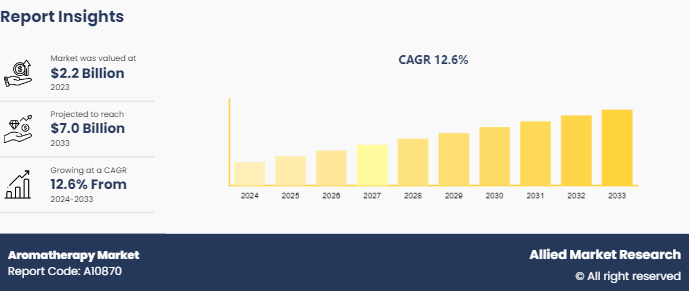
The global aromatherapy market was valued at $2.2 billion in 2023, and is projected to reach $7.0 billion by 2033, growing at a CAGR of 12.6% from 2024 to 2033. The increasing demand for natural wellness solutions, rising consumer awareness of the benefits of essential oils, and growing adoption of aromatherapy in personal care, healthcare, and spa industries are the major factors driving the growth of the market.
Market Introduction and Definition
Aromatherapy involves the therapeutic use of essential oils extracted from plants to promote physical, emotional, and mental well-being. These essential oils are commonly used in various forms such as diffusers, topical applications, and massage oils. Popular oils such as lavender, eucalyptus, tea tree, and peppermint are known for their calming, healing, and invigorating properties. The practice is commonly used for stress relief, pain management, improving sleep, boosting mood, and enhancing overall health.
The market is witnessing significant demand from both the wellness industry and the healthcare sector, as aromatherapy is recognized for its holistic healing benefits. Additionally, increasing preferences for natural and organic products among consumers are contributing to the growth of the aromatherapy market. As the global awareness about the health benefits of essential oils rises, more people are integrating aromatherapy into their daily routines, leading to its expanded presence in home care, spa treatments, and mental health therapies. Technological advancements, including the development of advanced diffusion systems and innovative product formats, are also expected to enhance market growth during the forecast period.
Overall, with growing consumer inclination toward natural remedies and a focus on mental and physical wellness, the aromatherapy market is poised for robust growth between 2024 and 2033.
Key Takeaways
- The aromatherapy market analysis covers data from 20 countries, with a detailed segment breakdown for each, highlighting projected market values ($billion) from 2024 to 2033.
- Over 1,500 sources, including product literature, industry reports, annual publications, and other documents from leading aromatherapy industry players, as well as reputable industry journals, trade association releases, and government websites, have been thoroughly reviewed to provide valuable insights.
- The study combines high-quality data, expert opinions, and critical independent perspectives to offer a comprehensive analysis. This research approach aims to deliver a balanced view of global markets, helping stakeholders make well-informed decisions and achieve their growth objectives.
Key Market Dynamics
The aromatherapy market is shaped by evolving consumer wellness preferences, increasing demand for plant-based therapies, expanding retail distribution, and supportive regulatory developments for natural products. Rising stress levels, changing lifestyles, and growing interest in preventive healthcare are influencing purchasing behavior and long-term brand strategies across global markets.
Drivers
The aromatherapy market is primarily driven by the increasing consumer inclination toward natural and holistic wellness solutions. Growing awareness regarding the therapeutic benefits of essential oils in managing stress, anxiety, insomnia, pain, and skin conditions is significantly supporting market expansion. The rising prevalence of lifestyle-related disorders and mental health concerns has encouraged consumers to seek complementary therapies, including aromatherapy, as part of their daily self-care routines.
Another major growth driver is the rapid expansion of the spa, wellness, and personal care industries. Aromatherapy products such as diffusers, massage oils, scented candles, and bath products are widely used in relaxation therapies and luxury wellness services. Additionally, the growing demand for clean-label, organic, and chemical-free products has strengthened the adoption of essential oils derived from natural plant sources.
E-commerce growth and digital marketing have further accelerated product accessibility and consumer education. Online platforms enable small and mid-sized brands to reach a broader customer base, while social media influencers and wellness advocates promote the benefits of essential oils. Technological advancements in ultrasonic diffusers, portable inhalers, and blended formulations are also enhancing product convenience and effectiveness.
Restraints
Despite strong growth prospects, the aromatherapy market faces certain limitations. Variability in essential oil quality, lack of standardized regulations across countries, and the presence of counterfeit or adulterated products may hinder consumer trust. In some regions, limited clinical validation and scientific evidence regarding therapeutic claims can restrict acceptance within mainstream healthcare systems.
Price volatility of raw materials due to climatic conditions, crop yields, and supply chain disruptions can also affect production costs. Moreover, improper usage of concentrated essential oils may cause allergic reactions or adverse effects, raising safety concerns among new users.
Opportunities
Significant opportunities exist in product innovation and diversification. The development of personalized aromatherapy blends, functional wellness kits, and integration with wearable health technologies can expand market potential. Increasing collaboration between aromatherapy brands and healthcare practitioners is creating scope for clinical-grade formulations.
Emerging markets present strong growth opportunities due to rising disposable incomes and expanding awareness of holistic therapies. Sustainable sourcing practices, eco-friendly packaging, and organic certifications are expected to further enhance brand differentiation and long-term growth prospects in the global aromatherapy market.
Global Aromatherapy Market Analysis
Europe is a key market for essential oils, particularly within the aromatherapy sector. With a projected market value of $11.1 million (€10.4 million by 2028) and a robust annual growth rate of 9.1%, Europe’s demand for essential oils underscores its significance in the global market. In 2022, European imports of essential oils reached 68,094 tons, valued at over $1.978 billion (€1.844 billion), accounting for 43% of global imports.
Aromatherapy, a holistic therapy using essential oils derived from plants, has gained considerable popularity across Europe. These oils are used to enhance physical, emotional, and mental well-being, and the rising consumer interest in natural and therapeutic products is expected to drive continued growth in demand for aromatherapy oils.
With Europe's strong presence of leading flavor and fragrance manufacturers, which are pivotal to global innovation and distribution, there is a lucrative opportunity for essential oil exporters to meet the increasing demand by providing pure, safe, and sustainably sourced oils to the European aromatherapy market.
Most Popular Essential Oils in Europe and their Production Volume in metric tons (MT)
Essential Oil | Volume |
Citrus Oil (peels) | 1,000,000 MT |
Mint Oil (leaves) | 50,000 MT |
Clove Oil (buds, leaves, stems) | 30,000 MT |
Eucalyptus Oil (leaves) | 20,000 MT |
Market Segmentation
The aromatherapy market is segmented into product, mode of delivery, application, end-use industry, and region. By product, the market is divided into consumables and equipment. By mode of delivery, the market is divided into topical application, aerial diffusion, and direct inhalation. By application, the market is segmented into relaxation, skin & hair care, pain management, cold & cough, insomnia, scar management, and others. By end-use industry, the market is segmented into home use, spa & wellness centers, hospitals & clinics, and yoga & meditation centers. Region wise, the market is analyzed across North America, Europe, Asia-Pacific, and LAMEA.
The aromatherapy market demonstrates varied growth trends across its segments. By product, consumables hold the largest share due to frequent usage of essential oils and blends, while equipment such as diffusers continues to gain popularity. Based on mode of delivery, topical application dominates owing to its extensive use in massage and personal care, whereas aerial diffusion is witnessing steady adoption in residential and commercial environments. By application, relaxation remains the leading segment, followed by skin & hair care and insomnia management. Home use accounts for a significant share among end users, supported by rising consumer awareness and e-commerce penetration.
Regional Market Outlook
By region, North America dominates the aromatherapy market, driven by strong demand for natural wellness products, high consumer spending, and established distribution networks. Europe follows closely due to growing preference for organic and plant-based therapies. Asia-Pacific is projected to register the fastest growth, supported by expanding middle-class population and increasing wellness awareness. LAMEA is gradually gaining traction with improving retail infrastructure and rising interest in holistic health practices.
- In May 2023, US-based essential oil manufacturer doTERRA has expanded its operations to Europe, opening a manufacturing facility in Cork, Ireland. The Blarney facility, serving as doTERRA's European headquarters, will produce up to 10 million bottles of essential oils annually. With an initial staff of 65, the company plans to increase to 100 team members over time. This move underscores doTERRA's commitment to its European customer base and signifies a strategic entry point to Europe.
- In February 2023, Aliver's Rosemary Essential Oil has caused a stir in Europe since its launch early in 2023, drawing attention from health-conscious consumers and sparking a boom in the natural products sector. Known for its anti-inflammatory and antioxidant properties, the oil is hailed for its ability to enhance cognitive function, alleviate stress, and promote overall well-being. With a commitment to purity and quality, Aliver Cosmetics emphasizes its dedication to providing consumers with natural products free from harmful chemicals.
- In November 2022, Aroma-Zone, known for its affordable natural beauty products, initiated its Belgian expansion with great ambition. Following the success of its first store in Brussels, which drew massive crowds daily, the French brand planned to further expand its operation across Europe, including Germany, Italy, Spain, and Switzerland. These strategic moves and developments are anticipated to boost the aromatherapy market growth in the coming years.
Who Are the Key End Users Driving Adoption in the Aromatherapy Market?
The primary end users driving the adoption of aromatherapy products include individual consumers, wellness centers, spas, and health-conscious retail markets. Consumers seeking natural remedies for stress relief, pain management, skin care, and sleep disorders are among the largest groups fueling demand. Spas and wellness centers are also significant users, utilizing essential oils in massages, facials, and therapeutic treatments to enhance relaxation and rejuvenation experiences. Additionally, the healthcare industry, including hospitals and clinics, has started integrating aromatherapy into holistic treatment approaches for conditions like anxiety, depression, and pain management.
What Are the Latest Trends in the Aromatherapy Market?
The aromatherapy market is experiencing a shift toward personalized wellness solutions, with more consumers opting for customized essential oil blends tailored to their specific needs. The use of diffusers and portable inhalers has increased as more people seek convenient and on-the-go applications. Organic and sustainably sourced products are gaining popularity as consumers become more eco-conscious. There is also a growing trend of combining aromatherapy with other complementary therapies such as yoga and meditation, which enhances the holistic approach to health and wellness. Additionally, the rise of e-commerce is making aromatherapy products more accessible globally.
How Is Technology Impacting the Aromatherapy Market?
Technology has a significant impact on the aromatherapy market, particularly in product delivery methods and personalization. Ultrasonic diffusers and smart inhalers now allow consumers to control and customize their aromatherapy experiences, from the intensity of scent to the duration of diffusion. AI-driven wellness platforms are emerging, providing personalized aromatherapy recommendations based on individual health data and preferences. Additionally, advancements in extraction technologies are ensuring higher purity and consistency in essential oils, enhancing their effectiveness. Virtual consultations with wellness professionals are also growing, as people seek expert advice on using essential oils for specific conditions.
What Innovations Are Shaping the Aromatherapy Industry?
Innovations in the aromatherapy industry are centered around enhancing the convenience, effectiveness, and customization of essential oil products. There is increasing development in the use of wearable devices that can deliver essential oils for targeted benefits, such as reducing stress or boosting mood. Additionally, new formulations are being introduced that combine essential oils with other natural ingredients, such as CBD or herbal extracts, to provide enhanced therapeutic effects. Research into the effects of aromatherapy on mental health is also progressing, with studies exploring how essential oils can support emotional well-being and cognitive function. Advances in sustainable production practices and eco-friendly packaging are also transforming the market, aligning with growing consumer demand for environmentally responsible products.
Competitive Landscape
The aromatherapy market is characterized by a mix of well-established global brands and niche companies specializing in essential oils and wellness products. Key players in this space include d?TERRA, Young Living Essential Oils, Edens Garden, Mountain Rose Herbs, Plant Therapy Essential Oils, Rocky Mountain Oils, LLC, FLORIHANA, Falcon, Biolandes, and Stadler Form Aktiengesellschaft. These companies offer a wide range of essential oils, blends, diffusers, and other aromatherapy-related products aimed at promoting physical and emotional well-being.
In addition to these major players, smaller, regional brands are gaining traction by focusing on organic, sustainably sourced products, and personalized wellness solutions. Many companies in the aromatherapy market are investing in innovation, exploring new extraction methods, enhancing product purity, and developing eco-friendly packaging. Consumer education and the increasing availability of online platforms are further driving the growth of these companies in the global aromatherapy market.
Recent Key Strategies and Developments
- In September 2023, Escents Aromatherapy, a leading name in North America's aromatherapy market since 1992, launched its new Essential Oil Diffuser Collection designed to enhance holistic wellness. These diffusers are crafted to purify and refresh indoor environments while providing therapeutic benefits, such as alleviating allergies and creating peaceful, calming spaces.
- In February 2023, Veda Tinda Scent, a renowned essential oil manufacturer, introduced its Aromatherapy Oil Gift Set, featuring five 30 ml bottles of natural essential oils and a matching humidifier with LED lighting. Unlike traditional products, Veda Tinda Scent’s oils are both natural and water-soluble, ensuring seamless use with household humidifiers and diffusers.
Industry Trends
- On May 07, 2024, Zensah, renowned for its innovative athletic wear, introduced its latest offering, Sport Aromatherapy Shower Tabs. Crafted in the USA, these shower steamers are designed to transform athletes' daily routines into rejuvenating spa-like experiences. Infused with natural eucalyptus and menthol essential oils, the tabs provide a refreshing sensation, perfect for post-workout recovery.
- In January 2024, new research by Cleveland Clinic highlighted the effectiveness of aromatherapy in reducing stress for patients undergoing MRI scans, particularly those prone to claustrophobia. Led by MRI technician Angel Houston, the study found that aromatherapy not only alleviated patient anxiety but also improved image quality by promoting stillness during the procedure. By introducing essential oils within the MRI machine, patients experienced a more relaxed state, resulting in better physiological responses and enhanced overall experience.
- In January 2024, A recent randomized controlled trial conducted at Damascus University, Syria, assessed the efficacy of aromatherapy with Lavender-Neroli essential oil blend combined with background music in managing pediatric dental anxiety during anesthesia. The study, involving 56 children aged 6-10 undergoing dental treatment, found significant reductions in anxiety levels and vital signs in the aromatherapy with music group compared to the control group. This non-pharmacological approach presents a promising method for alleviating dental anxiety in children.
- In November 2023, the research study, conducted by chemist Snezana Agatonovic-Kustrin at I.M. Sechenov First Moscow State Medical University, highlighted the potential of aromatherapy oils in aiding older adults battling dementia. Studies suggested that essential oils like lemon balm and lavender may alleviate symptoms and even improve cognitive function in dementia patients. While further large-scale trials are needed, early findings indicate that aromatherapy could offer a non-invasive approach to providing relief for those affected by dementia.
Key Sources Referred
- EOAI
- BORDAS S.A.
- European Federation of Essential Oils
- IFEAT
- Aromahead LLC
- Alliance of International Aromatherapists
- AromaWeb, LLC
- Aromatherapy Trade Council
- National Association for Holistic Aromatherapy
- International Federation of Professional Aromatherapists (IFPA)
Key Benefits For Stakeholders
- This report presents a quantitative analysis of the aromatherapy market, including segment breakdowns, current trends, forecasts, and dynamics from 2025 to 2033, to identify key market opportunities. It offers valuable insights into the primary drivers, challenges, and potential growth areas within the market.
- Porter's Five Forces analysis is included to assess the bargaining power of buyers and suppliers, helping stakeholders make informed, profit-driven business decisions and strengthen their supplier-buyer relationships. A detailed segmentation analysis of the aromatherapy market highlights the most significant opportunities currently available.
- The report also maps major countries within each region based on their revenue contribution to the global market. Market player positioning analysis provides a benchmark for understanding the current standing of key players in the industry.
- In addition, the report covers regional and global market trends, key players, market segments, applications, and growth strategies.
Aromatherapy Market Report Highlights
| Aspects | Details |
 Market Size By 2033 | USD 7.0 Billion |
 Growth Rate | CAGR of 12.6% |
 Forecast period | 2024 - 2033 |
 Report Pages | 232 |
 By Product |
|
 By Mode Of Delivery |
|
 By Application |
|
 By End-use Industry |
|
 By Region |
|
 Key Market Players | d?TERRA, Biolandes, Plant Therapy Essential Oils, Stadler Form Aktiengesellschaft, Falcon, Mountain Rose Herbs, Edens Garden, Rocky Mountain Oils, LLC, Young Living Essential oils, FLORIHANA |
Analyst Review
The aromatherapy market is witnessing trends towards sustainable and organic essential oils, personalized blends, and innovative delivery methods like diffusers and inhalers.
The leading application of aromatherapy includes its use in skin & hair care, pain management, and others.
North America is the largest regional market for aromatherapy.
The global aromatherapy market is estimated to reach $7.0 billion by 2033.
The companies that hold major share in aromatherapy market are Young Living Essential Oils, Edens Garden, and Mountain Rose Herbs.
Loading Table Of Content...