
Artificial Flower Market Research, 2034
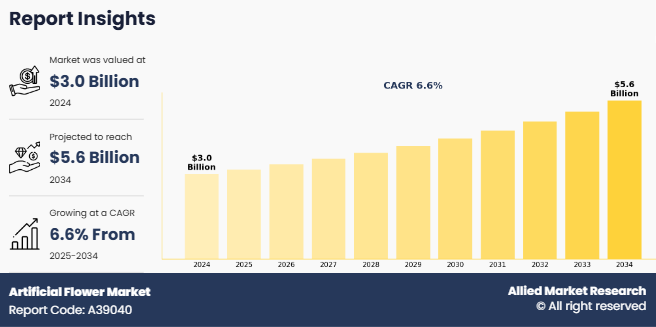
The global artificial flower market size was valued at $3 billion in 2024, and is projected to reach $5.6 billion by 2034, growing at a CAGR of 6.6% from 2025 to 2034. Artificial flowers are man-made creations of natural flowers that are intended to mimic the appearance, color, texture, and structure of actual blooms for decorative, ceremonial, and practical uses. They are often made of materials such as polyester, plastic, silk, paper, nylon, foam, or composite textiles, with molding, dyeing, and assembly procedures that mimic the delicate details of petals, stems, and leaves. The major goal of artificial flowers is to serve as a long-lasting, low-maintenance alternative to natural flowers while remaining visually appealing.
Key Takeaways
- By material, the polyester segment dominated the market in 2024.
- By application, the commercial segment dominated the market in 2024.
- By distribution channel, the commercial segment dominated the market in terms of revenue in 2024.
- By region, Europe dominated the market in terms of revenue in 2024.
Market Dynamics
The lower long-term cost of artificial flowers compared to fresh flowers is a key factor driving the growth of the artificial flower market. While fresh flowers require regular replacement, careful handling, and ongoing expenses for watering, refrigeration, and transportation, artificial flowers offer a one-time investment that delivers lasting value. Businesses such as hotels, restaurants, and event planners increasingly prefer artificial arrangements as they maintain their appearance indefinitely without the need for maintenance or seasonal sourcing. Similarly, households find artificial flowers to be a cost-effective way to enhance their interiors throughout the year without worrying about wilting or waste. The ability to reuse the same arrangements for multiple events or occasions also reduces operational costs for commercial users. In a time when consumers are becoming more conscious of both budget and sustainability, artificial flowers provide an appealing alternative that combines affordability, durability, and aesthetic consistency, making them a practical long-term choice over fresh blooms.
The expansion of online marketplaces and the advancement of logistics networks have become major drivers for the artificial flower market. E-commerce platforms such as Amazon, Etsy, and regional craft stores have made artificial flowers easily accessible to a global customer base, allowing consumers to browse vast varieties of styles, materials, and price ranges from the comfort of their homes. Improved logistics and fulfillment systems, including faster delivery options, better packaging solutions, and efficient cross-border shipping, have enhanced customer satisfaction and trust in online purchasing. These developments have also empowered small and medium-sized manufacturers and artisans to reach international audiences without relying on traditional retail intermediaries. Moreover, online platforms enable visual merchandising through high-quality images and virtual décor previews, influencing purchasing decisions and boosting demand. As supply chains become more streamlined and digital infrastructure strengthens, the synergy between online marketplaces and logistics continues to play a pivotal role in shaping the growth trajectory of the artificial flower industry.
Seasonality and shift in design trends act as significant restrain the growth of the artificial flower market. Consumer demand for artificial flowers often fluctuates around specific seasons, festivals, and events such as weddings, Valentine’s Day, Christmas, and spring décor periods, leading to uneven sale cycles throughout the year. Outside of these peak times, retailers and manufacturers often face reduced demand and excess inventory, which impact profitability and cash flow. In addition, artificial flowers are strongly influenced by evolving aesthetic and lifestyle trends — from minimalist home décor to nature-inspired biophilic designs — which quickly render existing collections outdated. Producers must frequently adapt to new color palettes, materials, and styles to stay relevant, increasing design and production costs. This constant need to anticipate and respond to short-lived fashion cycles makes inventory management challenging and poses risks for both retailers and suppliers, thereby limiting steady, year-round market growth.
Surge in demand for premium, realistic artificial flowers presents a significant opportunity for market expansion, especially within the luxury and design-conscious consumer segments. As consumers increasingly seek décor solutions that combine aesthetic appeal with practicality, lifelike artificial flowers crafted from advanced materials such as silk blends, latex coatings, and textured polymers have become popular. These products mimic the natural texture, color gradation, and even scent of real flowers, appealing to buyers who value elegance but prefer long-lasting alternatives to fresh blooms. Luxury hotels, event planners, and interior designers are also driving this segment by incorporating realistic floral arrangements into sophisticated environments that demand consistent visual quality without the maintenance of live plants. In addition, the rise in trend of premium home décor brands and boutique flower studios offering bespoke artificial arrangements has elevated the perception of artificial flowers from low-cost substitutes to design investments. This shift toward high-end craftsmanship and customization opens avenues for innovation and higher profit margins within the artificial flower market.
Segmentation Overview
The artificial flower market is segmented into material, application, distribution channel, and region. On the basis of material, the market is categorized into polyester, plastic, paper, nylon, silk, and others. On the basis of application, the market is divided into residential and commercial. On the basis of the distribution channel, the market is classified into online and offline. Region-wise, the artificial flower market is analyzed across North America (U.S., Canada and Mexico), Europe (France, Germany, Italy, Spain, UK, and rest of Europe), Asia-Pacific (China, Japan, India, Australia, South Korea, and rest of Asia-Pacific) and LAMEA (Brazil, South Africa, UAE, Saudi Arabia, Argentina and rest of LAMEA).
By Material
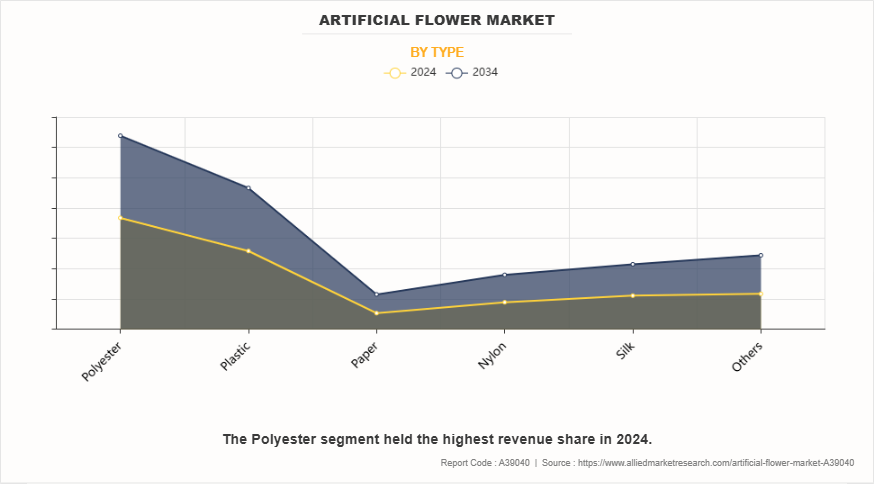
By material, the polyester segment dominated the artificial flower market in 2024 and is anticipated to maintain its dominance during the forecast period, due to its versatility, durability, and cost-effectiveness. The material’s ability to be easily dyed and molded allows manufacturers to replicate the vibrant colors and delicate textures of real flowers with high precision. Polyester flowers also resist fading, wrinkling, and moisture damage, making them suitable for both indoor and outdoor use. In addition, the balance between affordability and visual appeal has made polyester the preferred choice for mass production, catering to a wide range of consumer preferences across residential, commercial, and event décor applications and maitaining its high position in artificial flower market growth.
By Application
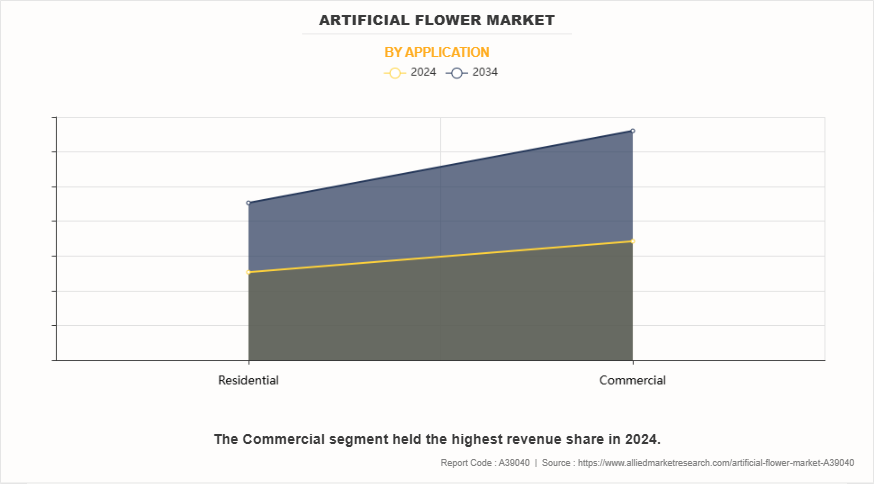
By application, the commercial segment dominated the artificial flower market in 2024 and is anticipated to maintain its dominance during the forecast period. The commercial segment dominates the artificial flower market as businesses increasingly adopt long-lasting, low-maintenance floral décor to enhance aesthetic appeal across spaces such as hotels, restaurants, offices, and retail stores. Artificial flowers offer a cost-effective solution that maintains a fresh and vibrant appearance year-round without the upkeep required for real blooms. Their versatility in design and ability to complement various interior themes make them a preferred choice for creating inviting and consistent brand environments. In addition, event management companies and hospitality venues rely heavily on artificial floral arrangements for large-scale decorations, further strengthening the dominance of the commercial segment in the market.
By Distribution Channel
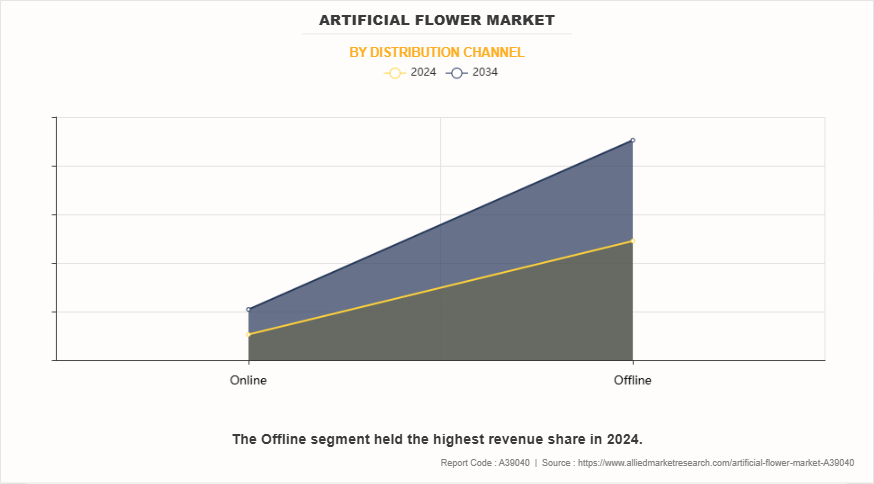
By distribution channel, the offline segment dominated the artificial flower market in 2024 and is anticipated to maintain its dominance during the artificial flower market forecast period. The offline distribution channel dominates the artificial flower market, driven by consumers’ preference for physically inspecting the quality, texture, and color of floral products before purchase. Retail stores, home décor outlets, craft stores, and specialized flower shops provide a tactile shopping experience that allows buyers to assess realism and design suitability factors crucial for decorative purchases. Moreover, offline channels cater to event planners, interior designers, and bulk buyers who rely on immediate availability and personalized service. Seasonal displays and curated in-store arrangements also help inspire customers, further reinforcing the strong foothold of offline sales in the artificial flower market.
By Region
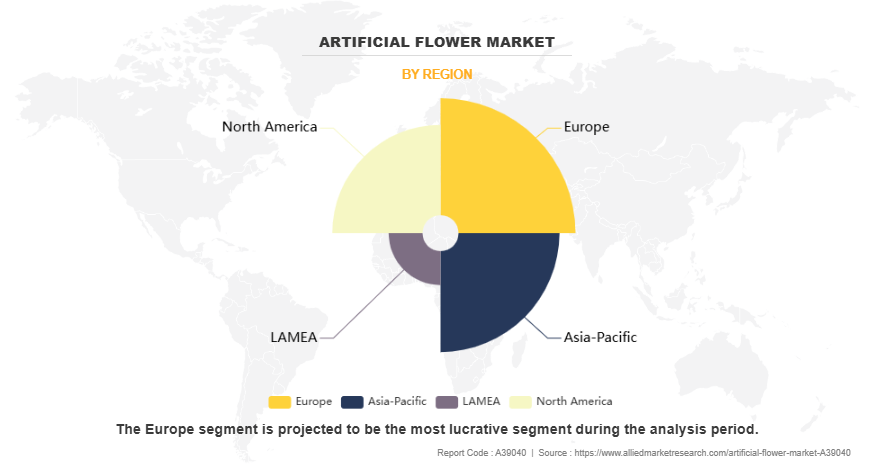
By region, Europe segment dominated the artificial flower market in 2024 and is anticipated to maintain its dominance during the forecast period, due to its strong demand for high-quality, design-driven decorative products across residential, commercial, and event settings. The region’s mature retail infrastructure, widespread use of interior décor, and preference for premium, realistic artificial arrangements support consistent market growth. Additionally, European consumers and businesses increasingly value low-maintenance and long-lasting décor solutions, reinforcing the region’s leading position in both production and consumption of artificial flowers.
Competition Analysis
Players operating in the market have adopted various developmental strategies to expand their artificial flower market share, increase profitability, and remain competitive in the market The key players profiled in the report include FRS Holding S.R.L., Foshan Tongxin Artificial Flowers Co., Ltd, Diane James Designs, Inc., NGAR TAT Production Fty. Ltd., Tree Locate, Oriental Fine Art Co., Ltd., SG Silk Flower Limited, Dongguan Fusheng Arts Products Co., Ltd, and Address Home Retail Pvt. Ltd.
Key Benefits For Stakeholders
- This report provides a quantitative analysis of the artificial flower market demand, market segments, current trends, estimations, and dynamics of the artificial flower market analysis from 2024 to 2034 to identify the prevailing artificial flower market opportunities.
- The artificial flower industry research is offered along with information related to key drivers, restraints, and opportunities.
- Porter's five forces analysis highlights the potency of buyers and suppliers to enable stakeholders make profit-oriented business decisions and strengthen their supplier-buyer network.
- In-depth analysis of the artificial flower market segmentation assists to determine the prevailing market opportunities.
- Major countries in each region are mapped according to their revenue contribution to the global market.
- Market player positioning facilitates benchmarking and provides a clear understanding of the present position of the market players.
- The report includes the analysis of the regional as well as global artificial flower market trends, key players, market segments, application areas, and market growth strategies.
Artificial Flower Market Report Highlights
| Aspects | Details |
 Market Size By 2034 | USD 5.6 billion |
 Growth Rate | CAGR of 6.6% |
 Forecast period | 2024 - 2034 |
 Report Pages | 300 |
 By Type |
|
 By Application |
|
 By Distribution Channel |
|
 By Region |
|
 Key Market Players | Dongguan Fusheng Arts Products Co., Ltd, Address Home Retail Pvt. Ltd., SG Silk Flower Limited, Diane James Designs, Inc., Oriental Fine Art Co., Ltd., TreeLocate, FRS Holding S.R.L., NGAR TAT Production Fty. Ltd., Foshan Tongxin Artificial Flowers Co., Ltd |
Analyst Review
Market experts view the artificial flower market as an evolving industry that has transitioned from being a niche decorative segment to a mainstream component of global home and event décor. In the past, artificial flowers were largely perceived as inexpensive substitutes for real blooms, often limited in quality and design variety. However, advancements in materials such as silk, latex, and high-grade polyester, along with modern manufacturing and coloring techniques, have dramatically improved their realism and aesthetic appeal. Experts note that in the present, artificial flowers have become integral to interior design, hospitality, and retail environments due to their durability, versatility, and low maintenance. The increasing influence of sustainability and digital innovation, such as eco-friendly materials, 3D printing, and online customization, continues to redefine consumer expectations. Looking ahead, market specialists anticipate that the artificial flower industry will expand further as it merges artistry with technology, catering to a growing audience that values both environmental responsibility and aesthetic expression. The future is expected to see more premium, personalized, and sustainable offerings that blur the line between artificial and natural beauty.
The artificial flower market registered a CAGR of 6.6% from 2024 to 2034.
Raise the query and paste the link of the specific report and our sales executive will revert with the sample.
The forecast period in the artificial flower market report is from 2025 to 2034.
The top companies that hold the market share in the artificial flower Market include FRS Holding S.R.L., Foshan Tongxin Artificial Flowers Co., Ltd, Diane James Designs, Inc., and others.
The artificial flower market was valued at $2,980.2 million in 2024 and is estimated to reach $5,568.6 million by 2034, exhibiting a CAGR of 6.6% from 2025 to 2034.
The Artificial Flower Market report has 3 segments. The segments are material, application, distribution channel, and region.
The emerging regions in the Artificial Flower Market are likely to grow at a CAGR of more than 7.0% from 2025 to 2034.
Europe will dominate the Artificial Flower Market by the end of 2034.
Loading Table Of Content...
Loading Research Methodology...