
Chemotherapy Induced Peripheral Neuropathy Treatment Market Research, 2033
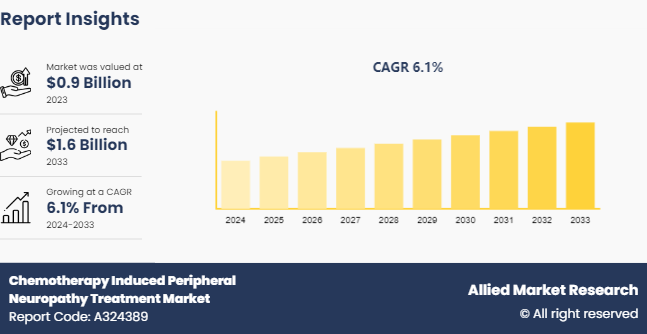
The global chemotherapy induced peripheral neuropathy treatment market size was valued at $0.9 billion in 2023, and is projected to reach $1.6 billion by 2033, growing at a CAGR of 6.1% from 2024 to 2033. Increasing prevalence of cancer, rising use of neurotoxic chemotherapeutic agents, growing awareness of chemotherapy-induced peripheral neuropathy (CIPN), and expanding geriatric population are key factors driving the growth of the chemotherapy-induced peripheral neuropathy treatment market.
Market Introduction and Definition
The chemotherapy-induced peripheral neuropathy treatment market includes pharmaceutical drugs, nutraceuticals, medical devices, and therapeutic interventions aimed at preventing, managing, or alleviating peripheral nerve damage caused by chemotherapy. CIPN is a common adverse effect of agents such as platinum compounds, taxanes, and vinca alkaloids, leading to symptoms like numbness, tingling, pain, and impaired motor function, which can significantly reduce quality of life and treatment adherence.
Treatments focus on symptom relief, functional improvement, and mitigation of neuropathic progression, often combining pharmacological and non-pharmacological approaches. CIPN treatment involves administration of agents including anticonvulsants, antidepressants, topical analgesics, and neuroprotective compounds, as well as emerging therapies such as nerve growth factor modulators and targeted rehabilitation programs.
Rising global incidence of cancer, expanding oncology care infrastructure, and increasing adoption of personalized medicine approaches are fueling market demand. Regulatory approvals for novel neuroprotective therapies, growing clinical trial activity, and increased investment by pharmaceutical and biotechnology companies are further accelerating growth. The integration of digital health tools, such as patient monitoring apps and telemedicine for symptom tracking, is enhancing treatment adherence and outcomes.
As the oncology patient population continues to expand and awareness of CIPN management grows, the chemotherapy-induced peripheral neuropathy treatment market is projected to experience steady growth during the forecast period, driven by unmet clinical needs, increasing healthcare access, and rising emphasis on improving patients’ quality of life.
Key Takeaways
- The chemotherapy-induced peripheral neuropathy treatment market share analysis spans 20 countries, with each country segmented and evaluated in terms of market value over the forecast period.
- Over 1,500 sources—including product literature, industry announcements, annual reports, and other key publications from leading market participants—along with verified industry journals, trade association releases, and government databases, were reviewed to generate in-depth, high-value market insights.
- The study combines reliable data, expert opinions, and independent analytical perspectives to provide a comprehensive and balanced overview of the global market. This research approach is designed to support stakeholders in making informed decisions and achieving their strategic growth objectives.
Key Market Dynamics
The chemotherapy-induced peripheral neuropathy (CIPN) treatment market is influenced by the rising global burden of cancer, increasing use of neurotoxic chemotherapeutic agents, and growing recognition of long-term treatment-related complications. As survival rates improve, greater attention is being directed toward managing adverse effects that impact patients’ quality of life, including neuropathic pain and functional impairment. Expanding oncology care infrastructure, integration of supportive care into cancer treatment protocols, and advancements in neuroprotective research are significantly shaping chemotherapy-induced peripheral neuropathy treatment market growth.
Drivers
The chemotherapy-induced peripheral neuropathy treatment market is primarily driven by the growing incidence of cancer worldwide. The widespread use of platinum-based drugs, taxanes, vinca alkaloids, and proteasome inhibitors has led to a higher prevalence of neuropathic complications among patients undergoing chemotherapy. As healthcare providers aim to maintain optimal dosing regimens without compromising patient safety, effective CIPN management has become critical.
Another major growth driver is increasing awareness among oncologists and patients regarding early detection and proactive management of neuropathy symptoms. Clinical guidelines are increasingly emphasizing supportive care, prompting higher adoption of pharmacological treatments such as anticonvulsants, antidepressants, and topical agents. Expanding research and development activities focused on novel neuroprotective agents and regenerative therapies are also accelerating chemotherapy-induced peripheral neuropathy treatment market expansion. Furthermore, improvements in healthcare reimbursement policies in developed regions are supporting access to advanced pain management therapies.
Restraints
Despite promising growth prospects, the chemotherapy-induced peripheral neuropathy treatment market faces several challenges. Limited availability of FDA-approved or specifically indicated therapies for CIPN restricts standardized treatment options. Many current therapies provide symptomatic relief rather than disease modification, leading to variable patient outcomes.
Additionally, adverse side effects associated with neuropathic pain medications and limited clinical consensus on optimal treatment protocols may hinder widespread adoption. High treatment costs and inadequate reimbursement in certain developing regions can also limit accessibility. Variability in patient response and challenges in accurately assessing neuropathy severity further complicate therapeutic management.
Opportunities
The chemotherapy-induced peripheral neuropathy treatment market presents significant opportunities driven by advancements in targeted therapeutics and digital health integration. Ongoing clinical trials investigating novel biologics, neuroprotective compounds, and gene-based therapies are expected to expand the treatment landscape.
Growing investments in oncology research across Asia-Pacific, Latin America, and the Middle East are anticipated to create new growth avenues. Strategic collaborations between pharmaceutical companies, research institutions, and oncology centers can accelerate innovation and regulatory approvals. Increasing emphasis on survivorship care, quality-of-life improvement, and value-based healthcare models is projected to support sustained chemotherapy-induced peripheral neuropathy treatment market growth between 2024 and 2033.
Top 10 Cancer Type, By Prevalnce
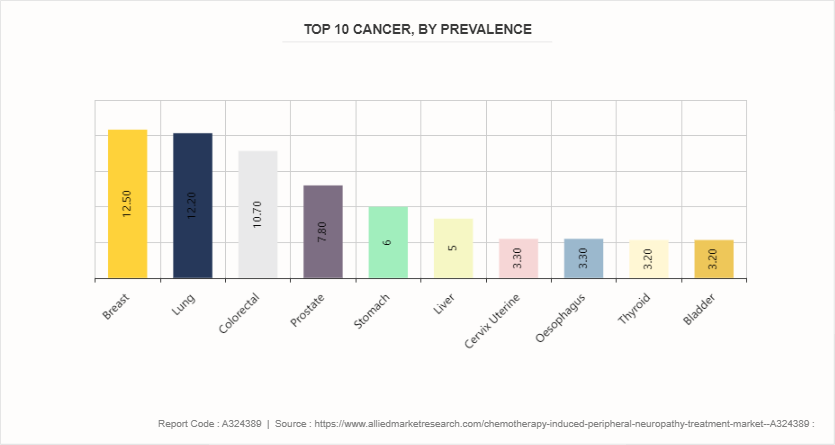
The top ten types of cancer, listed by their prevalence, highlight a significant health burden worldwide. Breast cancer is the most common, accounting for 12.5% of cases. It is closely followed by lung cancer, which constitutes 12.2% of cases. Colorectal cancer is the third most prevalent, with 10.7% of cases. Prostate cancer, primarily affecting men, represents 7.8% of cancer diagnoses. Stomach cancer is also notable, comprising 6% of cases, while liver cancer makes up 5%. Both cervix uterine cancer and oesophageal cancer each account for 3.3% of cases, indicating a considerable impact on the global population. Thyroid and bladder cancers each have a prevalence of 3.2%. As cancer rates increase globally, there is a growing demand for effective diagnostic tools that can accurately detect and characterize suspicious lesions. Vacuum-assisted biopsy devices have emerged as an efficient diagnostic option, offering advantages over traditional biopsy methods such as core needle biopsy.
According to the chemotherapy induced peripheral neuropathy treatment market analysis increasing prevalence of cancer globally is a pivotal factor driving the demand and growth in the chemotherapy induced peripheral neuropathy treatment market size. As cancer incidence rates rise due to factors such as aging populations, lifestyle changes, and environmental factors, more individuals are undergoing chemotherapy as a cornerstone of their cancer treatment regimen. While chemotherapy is essential for combating cancer cells, it often leads to unintended side effects like peripheral neuropathy, which can result in symptoms such as tingling, numbness, pain, and muscle weakness in the extremities.
Market Segmentation
The chemotherapy induced peripheral neuropathy treatment industry is segmented into treatment, drug class, drug type, distribution channel, and region. By drug class the chemotherapy-induced peripheral neuropathy treatment market is divided into nerve protective therapy, anti-inflammatory therapy, neurotransmitter-based therapy, antioxidant, others. By drug type the market is divided into branded, and generic. By distribution channel, the market is divided into hospital pharmacy, retail pharmacy, and online pharmacies. Region wise, the chemotherapy-induced peripheral neuropathy treatment market is analyzed across North America, Europe, Asia-Pacific, and LAMEA.
The chemotherapy-induced peripheral neuropathy treatment market demonstrates varied growth across segments. By drug class, nerve protective and neurotransmitter-based therapies lead, followed by anti-inflammatory agents and antioxidants. By drug type, branded drugs hold a larger share, while generics grow steadily. By distribution channel, hospital pharmacies dominate, with retail and online pharmacies expanding.
Regional/Country Market Outlook
North America holds the largest share of the chemotherapy-induced peripheral neuropathy treatment market, driven by extensive research and development activities, a strong presence of leading pharmaceutical companies, and a high prevalence of cancer. Advanced healthcare infrastructure and early adoption of supportive oncology therapies further contribute to regional dominance. However, chemotherapy-induced peripheral neuropathy treatment market opportunity analysis indicates that the Asia-Pacific region is projected to witness significant growth during the forecast period, supported by improving healthcare infrastructure, rising cancer incidence, and increasing awareness regarding chemotherapy-related side effects.
- In a 2024 article published by National Centre for Disease Informatics and Research, it was estimated that the projected cancer burden in India is expected to rise from 26.7 million DALYs (Disability-adjusted life year) in 2021 to 29.8 million in 2025.
- According to 2024 article by National Breast Cancer Foundation, Inc, in 2024, an estimated 310, 720 women and 2, 800 men will be diagnosed with invasive breast cancer.
- In an article published by European Commission, it was reported that in 2021, cancer was the second leading cause of death in the Europe, with 1.1 million deaths.
Leading Cancer Types by Global Prevalence
The ten most prevalent cancer types represent a substantial global health burden. Breast cancer ranks first, accounting for 12.5% of total cases worldwide, followed closely by lung cancer at 12.2%. Colorectal cancer holds the third position with 10.7% of cases. Prostate cancer, predominantly affecting men, represents 7.8% of diagnoses. Stomach cancer accounts for 6%, while liver cancer comprises 5% of total cases. Cervical (uterine cervix) cancer and oesophageal cancer each contribute 3.3% of cases. Thyroid cancer and bladder cancer both account for 3.2% of global cancer incidence.
With cancer rates rising globally, the overall disease burden continues to intensify. According to chemotherapy-induced peripheral neuropathy (CIPN) treatment market analysis, the increasing prevalence of cancer is a major factor fueling demand and growth in the CIPN treatment market. Contributing factors such as aging populations, sedentary lifestyles, and environmental influences are leading to higher cancer incidence worldwide.
As chemotherapy remains a cornerstone of cancer treatment, a growing number of patients are exposed to neurotoxic agents. Although chemotherapy plays a critical role in destroying cancer cells, it frequently results in adverse effects such as peripheral neuropathy. Patients commonly experience symptoms including tingling, numbness, burning pain, and muscle weakness in the hands and feet. Consequently, the expanding population of cancer patients undergoing chemotherapy is directly increasing the need for effective therapies to manage and alleviate CIPN symptoms, thereby driving chemotherapy-induced peripheral neuropathy treatment market growth.
Which End-User Segments Are Driving Growth in the Chemotherapy-Induced Peripheral Neuropathy Treatment Market?
The expansion of the chemotherapy-induced peripheral neuropathy (CIPN) treatment market is largely driven by oncology hospitals, specialty cancer centers, pharmaceutical and biotechnology companies, and rehabilitation clinics. Oncology hospitals represent the largest share, as they administer neurotoxic chemotherapies and manage treatment-related complications. With increasing patient volumes and emphasis on supportive care, hospitals are actively integrating neuropathy management protocols into oncology treatment pathways.
Specialty cancer centers and outpatient infusion clinics also play a vital role, particularly as cancer care shifts toward ambulatory settings. Pharmaceutical and biotechnology companies contribute significantly through research, clinical trials, and commercialization of novel neuroprotective agents. Additionally, rehabilitation centers and pain management clinics are emerging contributors, offering multidisciplinary approaches including pharmacologic therapy, physical therapy, and neuromodulation techniques to improve patient outcomes.
What Key Trends Are Shaping the Chemotherapy-Induced Peripheral Neuropathy Treatment Industry?
A major trend influencing the CIPN treatment market is the growing focus on survivorship care and quality-of-life improvement. As cancer survival rates increase, healthcare providers are prioritizing long-term management of chemotherapy-related side effects. Early screening and proactive intervention strategies are becoming standard practice in oncology settings.
Another important trend is the advancement of personalized medicine. Genetic profiling and biomarker research are helping identify patients at higher risk of developing neuropathy, enabling tailored therapeutic strategies. Increased clinical trial activity for disease-modifying therapies and neuroprotective agents is also reshaping the competitive landscape. Furthermore, the expansion of telemedicine and remote symptom monitoring tools is improving patient engagement and treatment adherence.
- According to a 2024 report by the National Cancer Institute, approximately 2,001,140 new cancer cases are expected to be diagnosed in the U.S. in 2024. Chemotherapy-induced peripheral neuropathy treatment market trend analysis indicates that the rising prevalence of cancer is a key factor driving growth in the chemotherapy-induced peripheral neuropathy (CIPN) treatment market.
- A 2023 study published by the National Library of Medicine reported that the prevalence of CIPN among ovarian cancer patients undergoing chemotherapy ranges between 30% and 70%. Additionally, the American Cancer Society noted that nearly 20 million new cancer cases were recorded globally in 2022, highlighting the expanding patient population at risk for neuropathy.
How Is Artificial Intelligence Influencing the Chemotherapy-Induced Peripheral Neuropathy Treatment Market?
Artificial intelligence (AI) is playing a growing role in enhancing CIPN management. AI-driven analytics can assess patient-reported symptoms, treatment history, and risk factors to predict the likelihood and severity of neuropathy. This enables oncologists to adjust chemotherapy regimens or initiate early supportive interventions.
Machine learning models are also supporting drug discovery by identifying potential neuroprotective compounds and optimizing clinical trial design. AI-based digital health platforms facilitate real-time symptom tracking, helping clinicians detect early warning signs and reduce the risk of irreversible nerve damage. These advancements improve decision-making accuracy and enhance personalized care strategies.
What Technological Innovations Are Advancing the Chemotherapy-Induced Peripheral Neuropathy Treatment Market?
Technological progress in the CIPN treatment market includes the development of targeted therapeutics, extended-release drug formulations, and non-invasive neuromodulation devices. Improved drug delivery systems are enhancing efficacy while minimizing systemic side effects.
Integration of digital health tools, wearable monitoring devices, and electronic health record systems is strengthening treatment coordination and data tracking. Additionally, advancements in regenerative medicine and nerve repair research are opening new avenues for long-term therapeutic solutions, supporting sustained market growth between 2024 and 2033.
Industry Trends
- According to 2024 article by National Cancer Institute, it was estimated that around 2, 001, 140 new cases of cancer will be diagnosed in the U.S. in 2024. According to the chemotherapy induced peripheral neuropathy treatment market trends analysis the growing prevalence of cancer is exoected to drive the growth of the market.
- According to 2023 article by National Library of Medicine, prevalence of chemotherapy induced peripheral neuropathy among individuals with ovarian cancer undergoing chemotherapy ranges from 30% to 70%.
- According to 2021 article by American Cancer Society, there were close to 20 million new cases of cancer in the year 2022
Competitive Landscape
The chemotherapy-induced peripheral neuropathy (CIPN) treatment market consists of established global pharmaceutical companies and emerging biotechnology firms focused on supportive oncology and neuroprotective therapies. Major players operating in this market include Alexion Pharmaceuticals, Inc., Sanofi, Takeda Pharmaceutical Company Limited, Vertex Pharmaceuticals Incorporated, F. Hoffmann-La Roche Ltd, Abbott Laboratories, Amgen Inc., Sun Pharmaceutical Industries Ltd., Amneal Pharmaceuticals LLC, and Asahi Kasei Pharma Corporation. Other notable participants include Solasia Pharma K.K. and Immunepharma.com.
These companies concentrate on expanding product portfolios, advancing clinical research, strategic collaborations, and geographic expansion to address unmet clinical needs and strengthen their competitive position in the growing CIPN treatment landscape.
Recent Industry Developments?????
- In 2023, F. Hoffmann-La Roche Ltd expanded its oncology research pipeline, increasing investment in supportive care therapies to complement its cancer treatment portfolio.
- In 2022, Takeda Pharmaceutical Company Limited advanced its neuroscience and rare disease capabilities through strategic collaborations and targeted acquisitions to enhance innovation.
- In 2021, Sun Pharmaceutical Industries Ltd. strengthened its specialty and branded generics portfolio through acquisitions and new product launches, supporting broader access to neuropathy and pain management therapies globally.
Key Sources Referred
- National Library of Medicine
- Ministry of Tourism, India
- American Society of Plastic Surgeons
- American Society of Aesthetic Plastic Surgeons
Key Benefits for Stakeholders
- This report presents a quantitative assessment of the chemotherapy-induced peripheral neuropathy (CIPN) treatment market, covering current trends, market dynamics, and projections from 2024 to 2033 to identify key growth opportunities. It includes insights on major drivers, restraints, and emerging opportunities.
- Porter’s Five Forces analysis evaluates the influence of buyers and suppliers, helping stakeholders make profit-driven decisions and optimize their supplier-buyer networks.
- Detailed segmentation analysis highlights prevailing market prospects, while major countries in each region are mapped according to their revenue contributions. Market player positioning enables benchmarking and a clear understanding of competitive standings.
- The report also examines global and regional trends, leading players, market segments, application areas, and growth strategies.
Chemotherapy Induced Peripheral Neuropathy Treatment Market , by Drug Class Report Highlights
| Aspects | Details |
 Market Size By 2033 | USD 1.6 Billion |
 Growth Rate | CAGR of 6.1% |
 Forecast period | 2024 - 2033 |
 Report Pages | 280 |
 By Drug Class |
|
 By Drug Type |
|
 By End User |
|
 By Region |
|
 Key Market Players | Sun Pharmaceuticals Industries Ltd, Amgen Inc., Sanofi, Amneal Pharmaceuticals LLC, F. Hoffmann-La Roche Ltd., Takeda Pharmaceutical Company Limited, Vertex Pharmaceuticals Incorporated, Abbott Laboratories, Alexion Pharmaceuticals, Inc., Asahi Kasei Pharma Corporation |
The global chemotherapy induced peripheral neuropathy treatment market was valued at $0.9 billion in 2023
The market value of chemotherapy induced peripheral neuropathy treatment market is projected to reach $1.6 billion by 2033.
The forecast period for chemotherapy induced peripheral neuropathy treatment market is 2024-2033.
The base year is 2023 in chemotherapy induced peripheral neuropathy treatment market
Major key players that operate in the chemotherapy induced peripheral neuropathy treatment market are Alexion Pharmaceuticals, Inc, Sanofi, F. Hoffmann-La Roche Ltd, Abbott Laboratories, and Amgen Inc
Loading Table Of Content...