
Hydrophobic Interaction Chromatography Market Overview
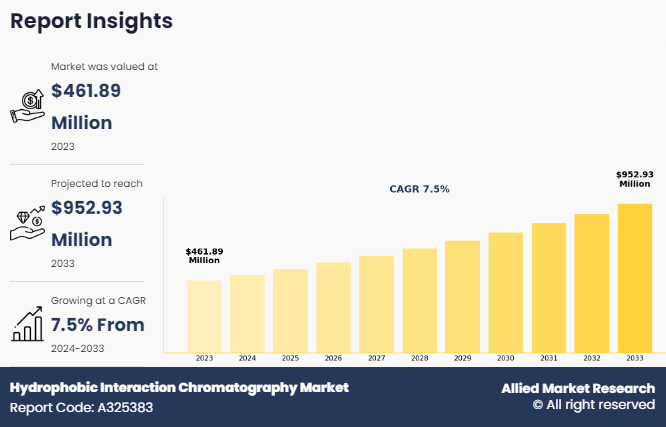
The global hydrophobic interaction chromatography market size was valued at $461.9 million in 2023, and is projected to reach $952.9 million by 2033, growing at a CAGR of 7.5% from 2024 to 2033. The hydrophobic interaction chromatography market growth is driven by an increase in demand for biopharmaceuticals, advancements in purification technologies, and rise in R&D investments in biotechnology.
Market Size & Future Outlook
- 2023 Market Size: $461.9 million
- 2033 Projected Market Size: $952.9 million
- CAGR (2024-2033): 7.5%
- North America: Largest market in 2023
- Asia Pacific: Fastest growing market
What is Meant by Hydrophobic Interaction Chromatography
Hydrophobic interaction chromatography is a specialized bio-separation technique used in laboratories and biopharmaceutical manufacturing to separate proteins based on differences in hydrophobicity. This is used in the purification of biologics, therapeutic proteins, and monoclonal antibodies. Increase in research in biologics, rise in demand for monoclonal antibodies and therapeutic proteins, and technological advancements in chromatography materials and resins boosts the growth of the market. Hydrophobic interaction chromatography exhibits the ability to enhance the purity and yield of critical biologic products. This is a key factor expanding its adoption across pharmaceutical, biopharmaceutical, academic research, and contract research sectors. It is widely used in drug discovery, development, and quality control processes. It is also used for vaccine production.
In addition, the growth of the hydrophobic interaction chromatography market is supported by significant investments in biotechnology research and surge in commercialization of biologic drugs. Purification technologies become essential part of manufacturing workflows as pharmaceutical companies continue to pursue targeted therapies. Furthermore, suppliers of chromatography columns, resins, and related consumables are focusing on innovation to offer higher efficiency and scalability, addressing the evolving needs of bioprocessing applications.
Geographically, the market is led by North America due to its well-established biopharmaceutical industry, followed by rapid growth in Asia-Pacific markets driven by increased biomanufacturing investments and expanding research infrastructure. Globally, the hydrophobic interaction chromatography market is set to experience robust growth and sustained demand during the forecast period.
Factors Influencing Market Growth
The hydrophobic interaction chromatography market growth is driven by an increase in demand for biopharmaceuticals, advancements in purification technologies, and rise in R&D investments in biotechnology. The efficiency of hydrophobic interaction chromatography in separating and purifying proteins boosts its adoption across different industries. In addition, regulatory support for biologics production also fuels the market growth.
Some companies focus on enhancing customer engagement and services by offering laboratory services, technical support, training, and digital tools that improve user experience.
What is Hydrophobic Interaction Chromatography?
Hydrophobic interaction chromatography is a purification technique used to separate biomolecules based on their hydrophobicity. It exploits the natural tendency of nonpolar molecules to associate in aqueous environments. Samples are introduced into a column containing a hydrophobic stationary phase, typically composed of ligands such as butyl, octyl, or phenyl groups attached to a solid support. The process begins with a high-salt buffer, promoting hydrophobic interactions between the target molecules and the stationary phase. Less hydrophobic molecules are removed first with gradual decrease in salt concentration; more hydrophobic molecules remain bound longer.
Key Takeaways
- By product and service, the product segment dominated the global hydrophobic interaction chromatography market in terms of revenue in 2023 and is expected to register the highest CAGR during the forecast period.
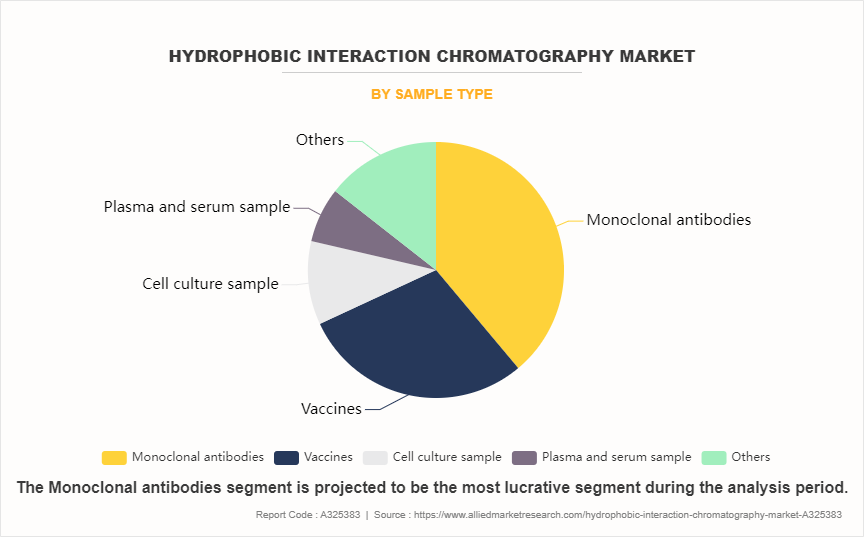
- By sample type, the monoclonal antibodies segment was the largest contributor to the market in 2023 and is expected to register the highest CAGR during the forecast period.
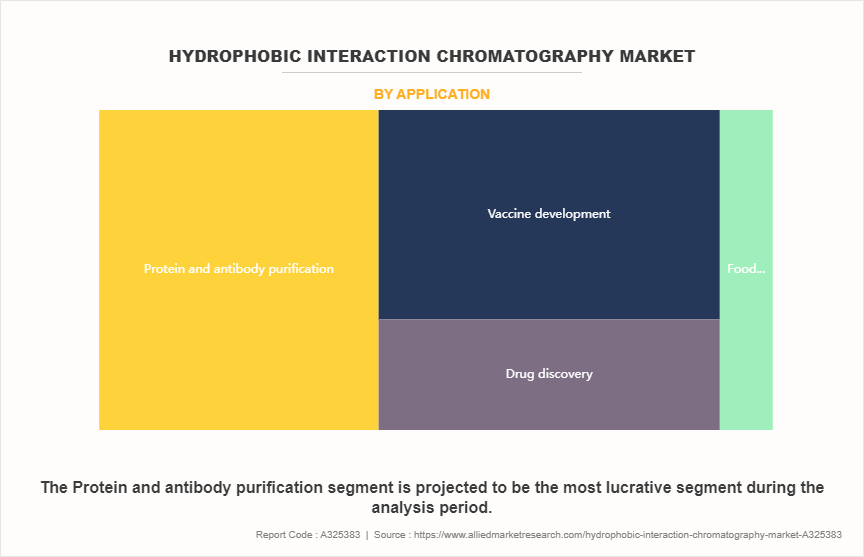
- By application, the protein and antibody purification segment was the largest contributor to the market in 2023 and is also expected to register the highest CAGR during the forecast period.
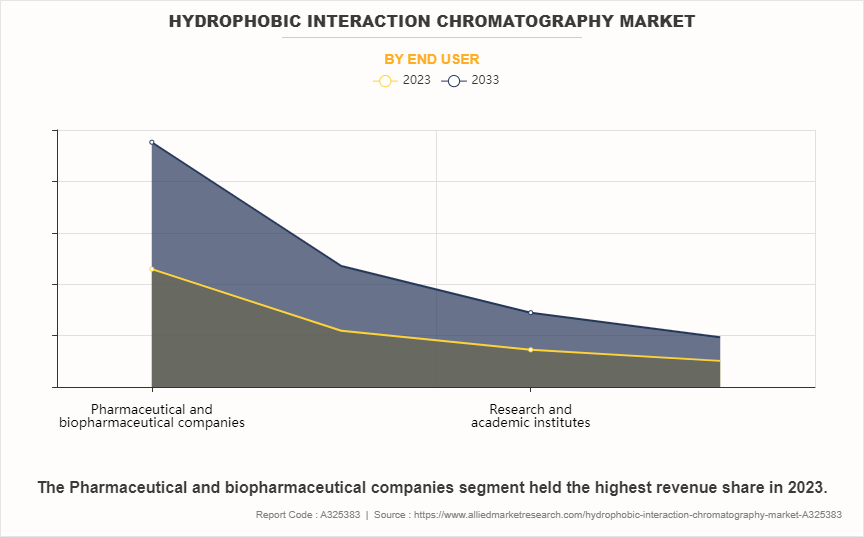
- By end user, the pharmaceutical and biopharmaceutical companies segment dominated the market in 2023. However, the contract research organizations and contract manufacturing organizations segment is expected to grow at a CAGR during the forecast period.
- By region, North America dominated the hydrophobic interaction chromatography market share in terms of revenue in 2023. However, Asia-Pacific is expected to register the highest CAGR during the forecast period.
Market Dynamics
Advancements in hydrophobic interaction chromatography technologies contribute to hydrophobic interaction chromatography market expansion. Innovations in stationary phases, such as improved resin formulations with better selectivity and binding capacities, enhance the efficiency and effectiveness of hydrophobic interaction chromatography. These advancements enable better separation of biomolecules, reduce processing times, and minimize the loss of active compounds, making hydrophobic interaction chromatography more attractive for large-scale applications. Furthermore, the development of new techniques, such as multistep or mixed-mode chromatography, that combine hydrophobic interaction chromatography with other methods to improve resolution and throughput, is expanding its applications in research and commercial production, thereby driving hydrophobic interaction chromatography market opportunity.
However, the high cost associated with hydrophobic interaction chromatography resin materials and the overall chromatography process limits the adoption of hydrophobic interaction chromatography and restricts market growth. The specialized equipment, reagents, and resins required for hydrophobic interaction chromatography can be expensive, making it a costly option for some laboratories and smaller companies, especially in developing regions. In addition, the complexity of method development and optimization for different biomolecules requires significant time and expertise, which may limit its widespread adoption. Furthermore, the need for highly skilled personnel to operate and manage hydrophobic interaction chromatography systems also add to operational costs and thereby hinders hydrophobic interaction chromatography market growth.
On the other hand, the increase in demand for monoclonal antibodies, therapeutic proteins, and biosimilars provides an opportunity for market growth. Technological advancements in chromatography resins and the development of efficient, cost-effective hydrophobic interaction chromatography systems also present opportunities for the market expansion. Moreover, the growing emphasis on improving manufacturing processes and regulatory compliance in the pharmaceutical industry creates a favorable environment for hydrophobic interaction chromatography adoption, as it meets stringent quality standards for protein production, thus boosting hydrophobic interaction chromatography market during the forecast period.
Hydrophobic Interaction Chromatography Market Segments Overview
The hydrophobic interaction chromatography market is segmented on the basis of product & service, sample type, application, end user, and region. On the basis of product and service, the market is classified into product and service. The product segment is further categorized into resin, buffer, column, and others. The resin segment is further classified into beads and others. The column segment is further divided into pre-packed columns and empty columns. The pre-packed column segment is further categorized into disposable and reusable.
On the basis of sample type, the market is classified into monoclonal antibodies, vaccines, cell culture sample, plasma and serum sample, and others. On the basis of application, the market is segmented into protein & antibody purification, vaccine development, drug discovery, and food & dietary supplement development. On the basis of end user, the market is segmented into pharmaceutical & biopharmaceutical companies, contract research organizations & contract manufacturing organizations, research & academic institutes, and others. Region wise, the hydrophobic interaction chromatography market is analyzed across North America, Europe, Asia-Pacific, and LAMEA.
What Are the Key Factors Driving the Hydrophobic Interaction Chromatography Market Growth?
Surge in demand for biologics and monoclonal antibodies is one of the major factors that drives the growth of the hydrophobic interaction chromatography market. Biologic drugs have become an important part in the treatment of complex chronic diseases. These drugs need to undergo robust purification processes to meet the regulatory standards. This fosters the need for hydrophobic interaction chromatography. Further, increase in research and development in biotechnology and pharmaceutical sectors also fuel the market growth. These investments support introduction of new therapies, biologics, and vaccines. Technological advancements that include improvements in chromatography resins, columns, and related consumables also encourage the adoption of hydrophobic interaction chromatography.
End-User Trends
There is an increase in the trend for outsourcing, automation, and scalability in different industries. Contract research organizations and contract manufacturing organizations provide flexible and cost-effective solutions to pharmaceutical companies. These companies focus on investing in advanced hydrophobic interaction chromatography systems that integrate with automated workflows to improve throughput and ensure compliance.
Why Is Demand Increasing in Hydrophobic Interaction Chromatography Market?
Rapid expansion of the biopharmaceutical industry is one of the primary factors that fosters the demand for hydrophobic interaction chromatography. Further, increase in research and development expenditure within pharmaceutical and biotechnology sectors also drive the growth of the hydrophobic interaction chromatography market. Advancements in technologies also enhance the performance of hydrophobic interaction chromatography, encouraging its adoption in different in bioprocessing facilities and research centers.
How Are Consumer Preferences Shaping Hydrophobic Interaction Chromatography Market Trends?
Consumer preferences are focused around efficiency, quality, scalability, and regulatory compliance in the hydrophobic interaction chromatography. Preference for high-performance purification methods that deliver greater resolution and higher purity is one of the major trends shaping the growth of the hydrophobic interaction chromatography market. Hydrophobic interaction chromatography offers an effective method for separating proteins based on hydrophobicity without compromising their native structure. This aligns with consumer demand for reliable, high-quality output in drug manufacturing and research applications.
Consumers also prefer scalable and flexible solutions that can adapt to different production volumes and workflows. This drives the demand for hydrophobic interaction chromatography products such as prepacked columns, customizable resins, and integrated systems that support both small-scale research and large-scale manufacturing.
Further, consumers also prefer automation and process integration. Laboratories and manufacturing facilities are adopting automated purification systems to reduce manual intervention, minimize errors, and improve reproducibility. Hydrophobic interaction chromatography suppliers are incorporating digital controls and process analytics into their products, enabling real-time monitoring, data capture, and integration with broader bioprocessing workflows. This shift towards automation meets customer expectations for efficiency and data traceability.
Competitive Analysis
Key players such as Waters Corporation and Merck KGaA. have adopted expansion product launch, and partnership as key developmental strategies to improve the product portfolio of the hydrophobic interaction chromatography market. For instance, in June 2023, Merck, a leading science and technology company expanding production capacity for highly purified reagents at its site in Nantong, China.
Who Are the Key Players in the Market and What Are Their Strategies?
These industries are recognized for their broad portfolios of chromatography systems, resins, columns, and supporting services that address diverse purification needs across research and biopharmaceutical manufacturing.
One of the most common approaches is product innovation and portfolio expansion. Companies focus on launch of new chromatography products that help simplify workflows and enhance purification performance. Another key strategy is capacity expansion and geographic growth. Major firms invest in expanding manufacturing capability and service infrastructure to better serve global customers. Partnerships and collaborations also play an important part in competitive strategy. Companies often work with academic institutions, biopharmaceutical firms, and contract research organizations to co-develop tailored solutions, validate emerging applications, or integrate chromatography technology into broader platforms. Such partnerships strengthen market presence while driving application-specific innovation.
By Product and Service
The product segment dominated the hydrophobic interaction chromatography market share in 2023 and is anticipated to register the fastest CAGR growth during the forecast period. This is attributed to the rise in demand for biologics, including monoclonal antibodies and therapeutic proteins. The increasing adoption of HIC for large-scale protein purification in the biopharmaceutical industry is a key factor. In addition, continuous advancements in chromatography resins and purification technologies further contribute to the growth of this segment.
PRODUCTANDSERVICEGRAPH]
By Sample Type
The monoclonal antibodies segment dominated the hydrophobic interaction chromatography market share in 2023 and is anticipated to register the fastest CAGR growth during the forecast period. This is attributed to their increase in use in the treatment of cancer, autoimmune diseases, and other chronic conditions. The growing demand for targeted therapies and personalized medicine is driving this trend. In addition, advancements in monoclonal antibody production and purification technologies, including hydrophobic interaction chromatography, further support hydrophobic interaction chromatography market growth.
By Application
The protein and antibody purification segment held the largest hydrophobic interaction chromatography market share in 2023 and is anticipated to register the fastest CAGR growth during the forecast period. This is attributed to the rise in demand for high-purity proteins and antibodies in drug development and therapeutic applications. The increasing focus on biologics and biosimilars, coupled with the need for efficient and scalable purification methods, drives the adoption of HIC. In addition, advancements in chromatography techniques that enhance protein stability and yield further contribute to the growth of this segment.
By End User
The pharmaceutical & biopharmaceutical companies segment held the largest hydrophobic interaction chromatography market size in 2023. This is attributed to the rise in demand for high-purity proteins and antibodies in drug development and therapeutic applications. The increasing focus on biologics and biosimilars, coupled with the need for efficient and scalable purification methods, drives the adoption of HIC. In addition, advancements in chromatography techniques that enhance protein stability and yield further contribute to the growth of this segment.
However, the contract research organizations and contract manufacturing organizations development segment is expected to register the highest CAGR during the forecast period. This is attributed to the increase in outsourcing of drug development and manufacturing processes to CROs and CMOs, which require efficient and scalable purification techniques such as HIC. In addition, the ability of CROs and CMOs to leverage advanced HIC technologies for large-scale protein and antibody purification further fuels the segment growth.
By Region
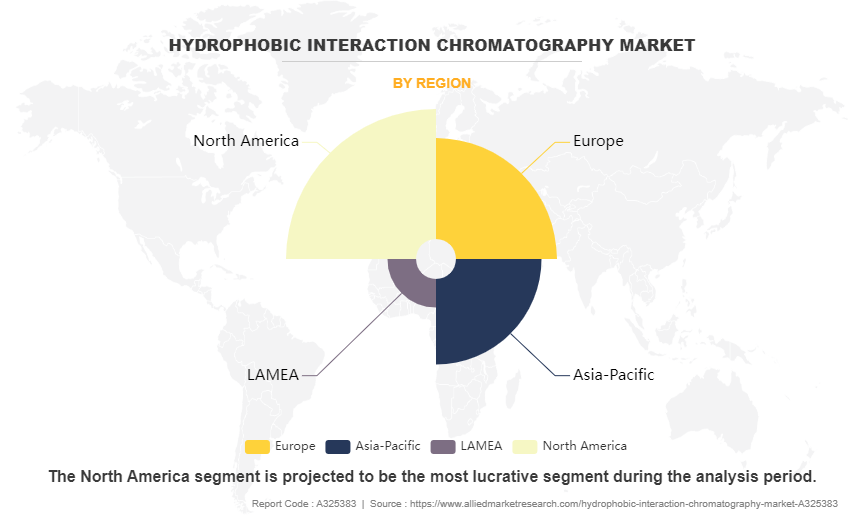
The hydrophobic interaction chromatography industry is analyzed across North America, Europe, Asia-Pacific, and LAMEA. North America dominated the market hydrophobic interaction chromatography market size in 2023. This dominance is attributed to the presence of a well-established biopharmaceutical industry, which heavily relies on advanced purification techniques such as HIC for the production of monoclonal antibodies, therapeutic proteins, and other biologics. The region benefits from significant investments in research and development, particularly in the fields of biotechnology and pharmaceuticals.
However, the Asia-Pacific region is anticipated to register the highest CAGR during the forecast period. This is attributed to the biotechnology and pharmaceutical industries in countries like China, India, and Japan, where there is an increasing demand for biologics and biosimilars. The region's expanding contract research and manufacturing services, coupled with rising investments in healthcare infrastructure, are driving the adoption of advanced purification technologies like hydrophobic interaction chromatography (HIC). In addition, favorable government policies, lower production costs, and the growing focus on improving research and development capabilities in the life sciences sector contribute to the region's strong market potential.
What are the Key Benefits for Stakeholders
- This report provides a quantitative analysis of the market segments, current trends, estimations, and dynamics of the hydrophobic interaction chromatography market analysis from 2023 to 2033 to identify the prevailing hydrophobic interaction chromatography market opportunities.
- The market research is offered along with information related to key drivers, restraints, and opportunities.
- Porter's five forces analysis highlights the potency of buyers and suppliers to enable stakeholders make profit-oriented business decisions and strengthen their supplier-buyer network.
- In-depth analysis of the hydrophobic interaction chromatography market segmentation assists to determine the prevailing market opportunities.
- Major countries in each region are mapped according to their revenue contribution to the global market.
- Market player positioning facilitates benchmarking and provides a clear understanding of the present position of the market players.
- The report includes the analysis of the regional as well as global hydrophobic interaction chromatography market trends, key players, market segments, application areas, and market growth strategies.
The report helps mitigate risks by offering in-depth insights. It also offers competitive landscape which helps stakeholders make strategic decisions for their businesses. It studies the changes in domain and helps support long-term business growth.
The report, published by Allied Market Research, focuses on market dynamics and key trends of the hydrophobic interaction chromatography market analysis. The study provides competitive landscape analysis of the key players to understand the adopted strategies and competitive intensity of competitors. It also offers a study of threat of new entrants, and bargaining power of buyers, on the hydrophobic interaction chromatography market outlook.
Hydrophobic Interaction Chromatography Market Report Highlights
| Aspects | Details |
 Market Size By 2033 | USD 952.9 million |
 Growth Rate | CAGR of 7.5% |
 Forecast period | 2023 - 2033 |
 Report Pages | 412 |
 By Product and Service |
|
 By Sample type |
|
 By Application |
|
 By End user |
|
 By Region |
|
 Key Market Players | Bio-Rad Laboratories, Inc. , Geno Technology, Inc., Danaher Corporation, Waters Corporation, KNAUER Wissenschaftliche Gerate GmbH, Tosoh Corporation, Sepax Technologies, Inc., Thermo Fisher Scientific Inc., Agilent Technologies, Inc., Sartorius AG, Merck KGaA |
Analyst Review
This section provides various opinions of top-level CXOs in the global hydrophobic interaction chromatography market. According to the insights of CXOs, the global hydrophobic interaction chromatography market is expected to exhibit high growth potential attributable to increase in demand for biologics, monoclonal antibodies, and therapeutic proteins. Advancements in biotechnology and pharmaceutical research, particularly in protein purification technologies, drive the adoption of hydrophobic interaction chromatography (HIC).
CXOs further added that the rise in prevalence of chronic diseases, along with a shift toward personalized medicine, further fuels the need for efficient and high-purity drug production methods, thereby driving the adoption of HIC techniques. In addition, continuous improvements in HIC technologies, such as enhanced resin formulations and automation, have made the process more cost-effective and scalable. Strong government investments in the biopharmaceutical industry and a rise in emphasis on regulatory compliance contribute to market expansion.
Furthermore, North America dominated the market share, in terms of revenue in 2023, owing to advanced healthcare infrastructure and high demand for biologics and therapeutic proteins. In addition, stringent regulatory requirements drive the adoption of hydrophobic interaction chromatography for high-purity production. However, Asia-Pacific is anticipated to witness notable growth owing to a rapid advancement in biotechnology & pharmaceutical manufacturing, increased investments in biomanufacturing infrastructure, and rise in demand for biologics & therapeutic proteins.
2023 is the base year of hydrophobic interaction chromatography market in the globe.
Protein and antibody purification is the leading application of hydrophobic interaction chromatography market.
North America is the largest regional market for hydrophobic interaction chromatography.
The hydrophobic interaction chromatography market was valued at $461.89 million in 2023 and is estimated to reach $952.93 million by 2033, exhibiting a CAGR of 7.5% from 2024 to 2033.
Major key players that operate in the global hydrophobic interaction chromatography market are Bio-Rad Laboratories, Inc., Sartorius AG, Thermo Fisher Scientific Inc., Tosoh Corporation, Danaher Corporation, Sepax Technologies, Inc., Agilent Technologies, Inc., Merck KGaA, Waters Corporation, and KNAUER Wissenschaftliche Geräte GmbH
Pharmaceutical and biopharmaceutical companies is the leading end user of hydrophobic interaction chromatography market.
2024 to 2033 is the forecast year of hydrophobic interaction chromatography market.
Loading Table Of Content...
Loading Research Methodology...