
Immunostimulant Market Research, 2034
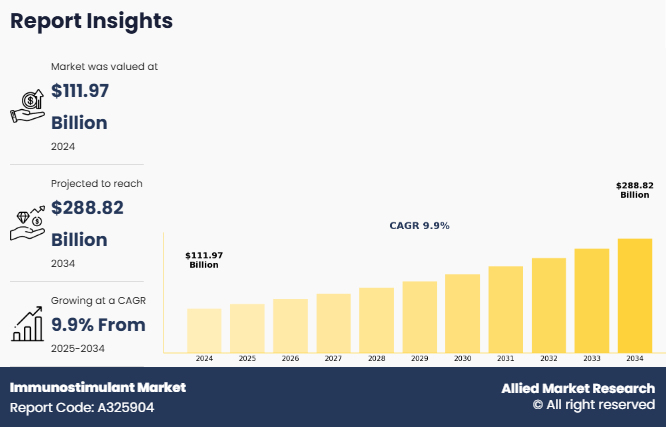
The global immunostimulant market size was valued at $111.97 billion in 2024, and is projected to reach $288.82 billion by 2034, growing at a CAGR of 9.9% from 2025 to 2034. The growth of the immunostimulant industry is driven by a rising global burden of infectious diseases, increasing prevalence of cancer and autoimmune disorders, and a strong focus on preventive healthcare.
According to the World Health Organization, infectious diseases continue to account for a significant share of global morbidity and mortality, with recurring outbreaks reinforcing the need for effective immune boosting therapies. In addition, chronic diseases such as cancer and immunodeficiency disorders are increasing at a rapid pace worldwide, which has intensified the adoption of immunostimulation products in clinical care. Growing awareness about vaccination and immune modulation therapies, along with expanding government immunization programs, continues to elevate the demand for immunostimulants globally and drive the immunostimulant market growth.
Immunostimulants are therapeutic agents that enhance the body's natural immune response and strengthen its ability to fight infections and diseases. These products function by activating specific components of the immune system such as cytokine pathways, cellular immunity, and antibody production. They play a critical role in improving host defense, reducing disease severity, and supporting recovery in conditions that involve weakened or dysregulated immunity. Immunostimulants are widely used in the management of infectious diseases, oncology, respiratory disorders, and immunodeficiency conditions. With increasing focus on preventive medicine, rising R&D efforts in biologics, and continuous advancements in vaccine technologies, immunostimulants have become an essential part of modern therapeutic strategies and are expected to witness strong adoption across healthcare systems worldwide.
Key Takeaways
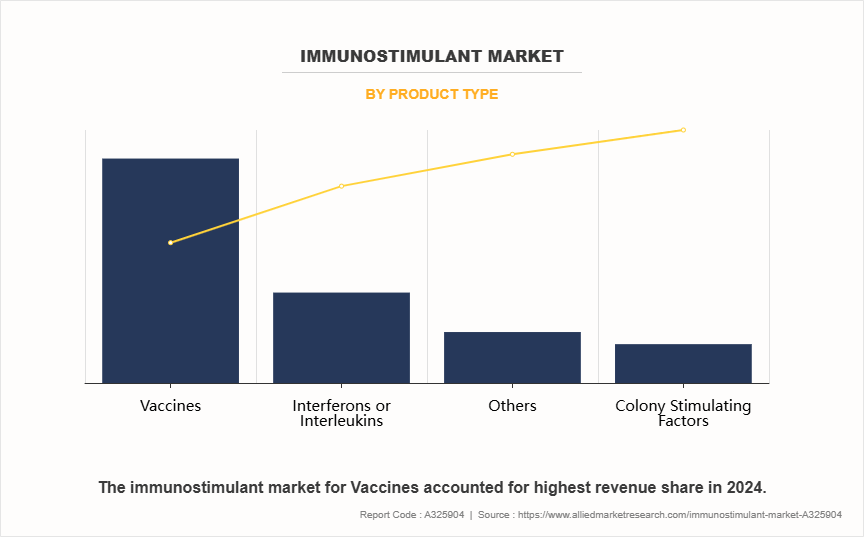
- On the basis of product type, the vaccine segment dominated the immunostimulant market in terms of revenue in 2024 and is anticipated to grow at the fastest CAGR during the forecast period.
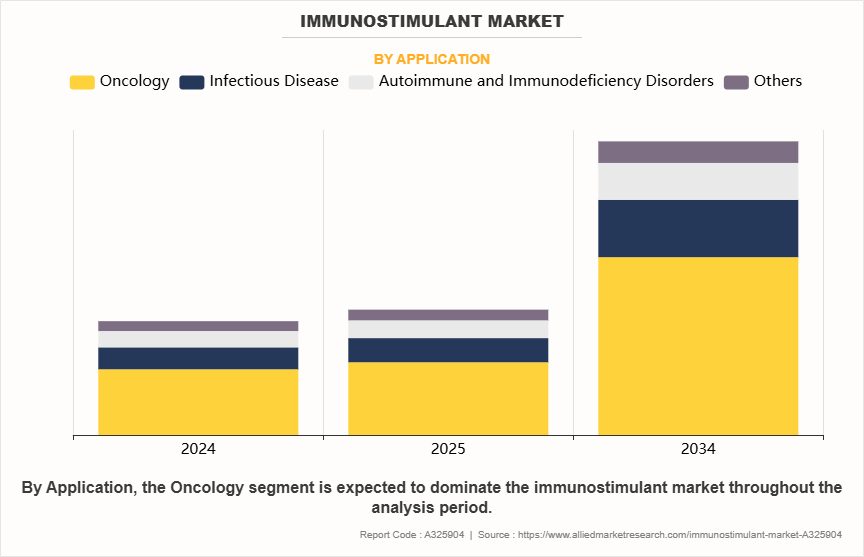
- On the basis of application, the oncology segment dominated the immunostimulant market in terms of revenue in 2024 and is anticipated to grow at the fastest CAGR during the forecast period.
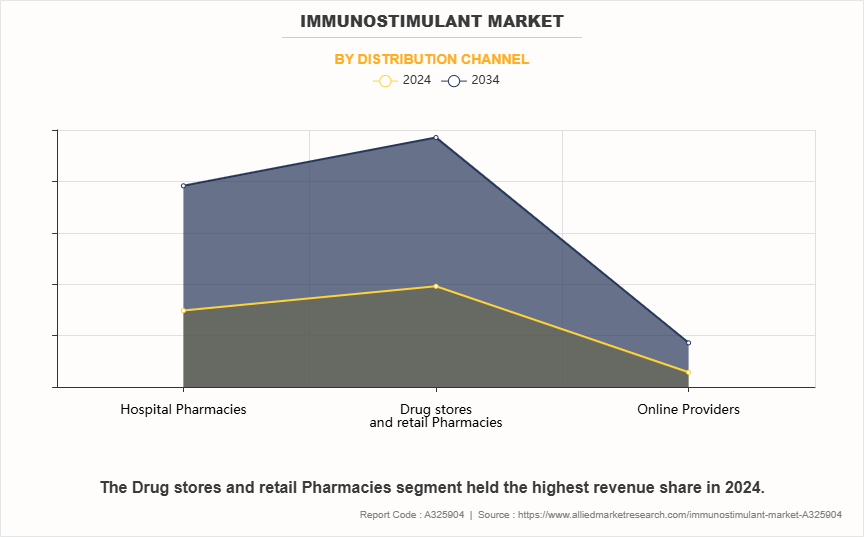
- On the basis of distribution channel, the drug stores and retail pharmacies segment dominated the immunostimulant market in terms of revenue in 2024. However, the online providers segment is anticipated to grow at the fastest CAGR during the forecast period.
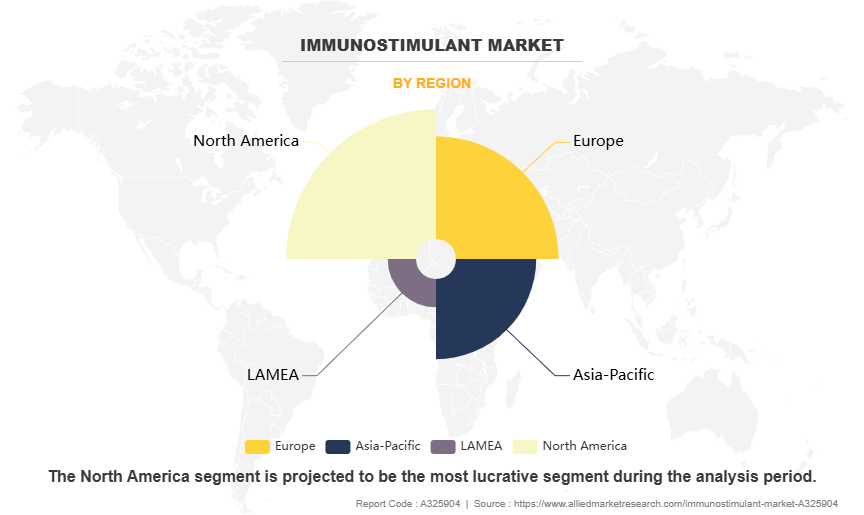
- Region-wise, North America generated the largest revenue in 2024. However, Asia-Pacific is anticipated to grow at the highest CAGR during the forecast period.
Market Dynamics
The immunostimulant market size is experiencing steady growth driven by a combination of epidemiological, clinical, and technological factors. One of the primary drivers is the rising global incidence of infectious diseases, autoimmune disorders, and cancer. Increasing exposure to emerging pathogens, antimicrobial resistance, and recurring viral outbreaks has intensified the focus on strengthening the immune system. As a result, there is a growing demand for immunostimulant products that enhance the body's natural defense mechanisms and support faster recovery. Immunostimulants, which activate cellular and humoral immunity, have become essential therapeutic tools in hospitals, specialty clinics, and community health settings.
Another major growth factor for immunostimulant market is the rapid expansion of vaccination programs and biologics-based therapies across both developed and developing regions. Vaccines, cytokines, and colony-stimulating factors are widely used for prophylactic and therapeutic purposes, particularly in oncology, respiratory diseases, and immunodeficiency disorders. The increasing adoption of advanced immunotherapies in cancer care is contributing significantly to immunostimulant market expansion. Healthcare providers are investing in these products to improve patient outcomes, reduce complication risks, and enhance the effectiveness of standard treatment regimens.
Technological progress in immunology and biotechnology is also shaping the immunostimulant market landscape. Innovations such as recombinant DNA technologies, advanced adjuvant systems, and next-generation vaccine platforms are improving the safety, efficacy, and durability of immune responses. The integration of artificial intelligence and real-time analytics in immune response profiling is enabling more personalized and targeted immunostimulant therapies. These advances are supporting the development of novel biological agents that can address a wider spectrum of diseases with greater precision.
In addition, the growing emphasis on preventive healthcare is amplifying the demand for immunostimulants and drive the growth during immunostimulant market forecast. Populations worldwide are becoming more aware of the importance of immune health for maintaining overall wellbeing, especially in aging communities that are more vulnerable to infections and chronic illnesses. Regions such as North America, Europe, and East Asia are witnessing rising usage of immunostimulant therapies due to increasing chronic disease burden and expanding elderly populations that require stronger immune support.
Emerging markets in Asia-Pacific, Latin America, and the Middle East are creating new opportunities for immunostimulant manufacturers. Factors such as rising healthcare investment, expanding diagnostic capabilities, higher incidence of viral infections, and improved access to biologics are driving market growth in these regions. Governments are strengthening immunization campaigns and public health programs, while private healthcare institutions are adopting advanced immune boosting therapies. Local and regional players are also introducing affordable immunostimulant products that meet diverse clinical needs and budget constraints, which is helping increase market penetration and accessibility.
Segmental Overview on Immunostimulant Market
The immunostimulant market outlook is segmented into product type, application, distribution channel, and region. On the basis of the product type, it is bifurcated into vaccines, colony stimulating factors (CSFs), interferons / interleukins (cytokines), and others. On the basis of application, the market is segregated into oncology, infectious disease, autoimmune and immunodeficiency disorders, and others. On the basis of distribution channel, the market is categorized into hospital pharmacies, drug stores & retail pharmacies, and online providers. Region-wise, the market is studied across North America, Europe, Asia-Pacific, and LAMEA.
By Product Type
On the basis of product type, the vaccine segment dominated the immunostimulant market share in 2024 and is expected to witness the highest CAGR during the forecast period owing to its widespread use in preventive healthcare, strong government immunization programs, and continuous advancements in vaccine technologies. Increasing demand for protection against emerging infectious diseases and expanded vaccination coverage across both developed and developing regions further contribute to the growth of this segment.
By Application
On the basis of application, the oncology segment dominated the immunostimulant market in 2024 and is anticipated to register the highest CAGR during the forecast period. This growth is fueled by the rising global incidence of cancer, increasing adoption of immunotherapies, and growing use of cytokines and colon-stimulating factors in cancer treatment. Enhanced focus on targeted immune modulation to improve patient outcomes also supports segment expansion.
By Distribution Channel
On the basis of distribution channel, the drug stores and retail pharmacies segment dominated the immunostimulant market in 2024, owing to their wide accessibility, high patient footfall, and strong presence across urban and semi-urban regions. These outlets offer convenient access to prescription and over-the-counter immune stimulants, which support consistent sales volume.
However, the online providers segment is expected to witness the highest CAGR during the forecast period owing to the rapid growth of e-commerce in the pharmaceutical sector, increasing preference for home delivery, and strong demand for price transparency. Digital health platforms offering easy product comparison and doorstep availability further accelerate segment growth.
By Region
Region wise, North America held the largest immunostimulant market share in 2024, due to the high prevalence of chronic and infectious diseases, strong healthcare infrastructure, and significant adoption of advanced immunotherapies. Robust government vaccination initiatives and extensive R&D activities in immunology further strengthen regional dominance.
However, Asia-Pacific is projected to register the highest CAGR during the immunostimulant market forecast period owing to rising healthcare investments, growing incidence of infectious diseases, and expanding access to biologics and vaccines. Increasing awareness of immune health and improving distribution networks across emerging economies also support the region's rapid growth.
Competition Analysis
Competitive analysis and profiles of the major players in the immunostimulant industry report include Sinovac Biotech Ltd, Pfizer Inc., Bristol-Myers Squibb Company, Sanofi, Serum Institute of India Pvt. Ltd., Novartis AG, F. Hoffmann-La Roche Ltd., Johnson & Johnson, Emergent BioSolutions Inc., and GSK. The key players operating in the market have adopted product launch as their key strategies to expand their product portfolio.
Key Benefits For Stakeholders
- This report provides a quantitative analysis of the market segments, current trends, estimations, and dynamics of the immunostimulant market analysis from 2024 to 2034 to identify the prevailing immunostimulant market opportunity.
- The market research is offered along with information related to key drivers, restraints, and opportunities.
- Porter's five forces analysis highlights the potency of buyers and suppliers to enable stakeholders make profit-oriented business decisions and strengthen their supplier-buyer network.
- In-depth analysis of the immunostimulant market segmentation assists to determine the prevailing market opportunities.
- Major countries in each region are mapped according to their revenue contribution to the global market.
- Market player positioning facilitates benchmarking and provides a clear understanding of the present position of the market players.
- The report includes the analysis of the regional as well as global immunostimulant market trends, key players, market segments, application areas, and market growth strategies.
Immunostimulant Market Report Highlights
| Aspects | Details |
 Market Size By 2034 | USD 288.8 billion |
 Growth Rate | CAGR of 9.9% |
 Forecast period | 2024 - 2034 |
 Report Pages | 290 |
 By Product Type |
|
 By Application |
|
 By Distribution Channel |
|
 By Region |
|
 Key Market Players | Pfizer Inc., Emergent BioSolutions Inc., Novartis AG, GlaxoSmithKline plc, Bristol-Myers Squibb Company, Johnson & Johnson, Serum Institute of India Pvt. Ltd., Sanofi, F. Hoffmann-La Roche Ltd., Sinovac Biotech Ltd |
The immunostimulant market is dominated by leading global pharmaceutical and biotechnology companies such as F. Hoffmann-La Roche Ltd, Pfizer Inc., Novartis AG, Merck & Co., Inc., and Amgen Inc., which collectively hold a significant share due to their strong portfolios in immunotherapies, biologics, and oncology-driven immune-modulating treatments. These companies benefit from extensive R&D capabilities, robust clinical pipelines, and wide commercial presence across major markets, enabling them to maintain leadership in developing advanced immunostimulant products for cancer, infectious diseases, and chronic immune disorders.
The immunostimulant market was valued at $111.97 billion in 2024 and is estimated to reach $288.82 billion by 2034, exhibiting a CAGR of 9.9% from 2025 to 2034.
North America is the largest regional market for immunostimulants, supported by a strong biotechnology and pharmaceutical industry base, high healthcare expenditure, advanced immunotherapy research, and widespread adoption of innovative biologics. The region’s large cancer patient population, favorable regulatory environment, and extensive clinical trial activity further reinforce its leading position in the global market.
Oncology is the leading application segment in the immunostimulant market, driven by the increasing adoption of immunotherapies such as cancer vaccines, monoclonal antibodies, cytokines, and immune checkpoint modulators. The rising global burden of cancer, combined with strong clinical success rates, expanding R&D pipelines, and growing use of personalized and combination therapies, has positioned oncology at the forefront of immunostimulant applications.
The global immunostimulant market is witnessing upcoming trends such as the rapid development of next-generation biologics, including personalized cancer vaccines and targeted cytokine therapies that offer improved efficacy and safety. Advancements in AI-driven immunology research, nanoparticle-based delivery systems, and combination immunotherapies are further shaping product innovation. Additionally, rising consumer interest in preventive immunity, along with expanding use of self-administered and home-based immunostimulant treatments, is expected to drive future market growth.
Loading Table Of Content...
Loading Research Methodology...