
Mobile Dentistry Market Research, 2035
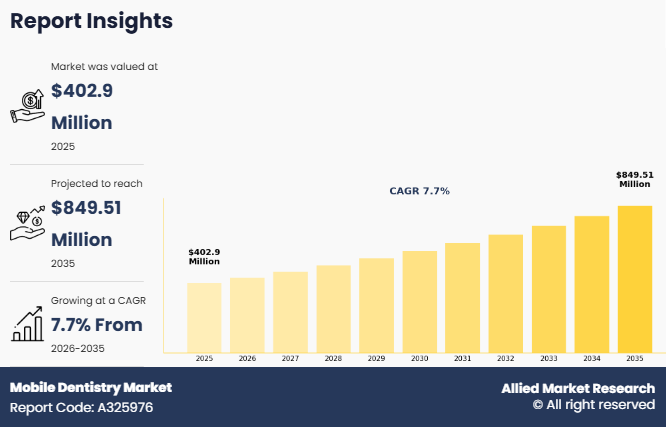
The global mobile dentistry market size was valued at $402.9 million in 2025, and is projected to reach $849.5 million by 2035, growing at a CAGR of 7.7% from 2026 to 2035. The mobile dentistry market growth is increasing significantly due to the growing need for accessible and convenient dental care services, particularly among underserved populations, rural communities, elderly patients, and individuals with mobility limitations. Mobile dentistry enables dental professionals to provide preventive, diagnostic, and basic treatment services directly at schools, nursing homes, corporate offices, and community centers using portable dental equipment and mobile clinics. In addition, rising awareness of oral health, increasing prevalence of dental disorders such as tooth decay and gum disease, and the need to reduce barriers such as travel time, high treatment costs, and limited dental infrastructure are further driving the adoption of mobile dental services across various regions.
Key Takeaways: Market Trends & Insights
- North America dominated the mobile dentistry market with a largest market share in 2025.
- The mobile dentistry market is expected to grow significantly over the forecast period.
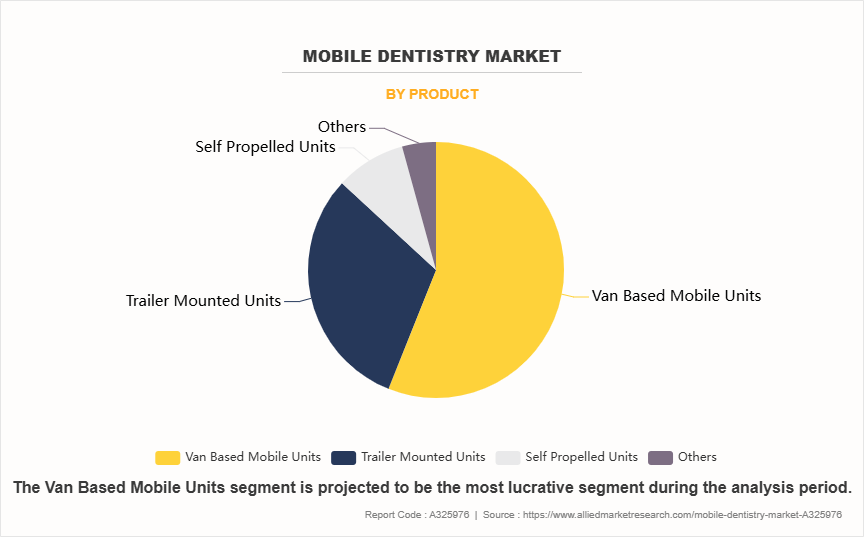
- By product, the van based mobile units segment held the largest mobile dentistry market share in 2025.
- The others segment held the highest growing market over the forecast period.
- A-dec Inc, Dentsply Sirona, and DENTALEZ, Inc. have emerged as prominent startups and growth-stage companies in the mobile dentistry market due to their strong digital platforms, expanding service networks, and significant funding to develop innovative mobile and teledentistry solution.
Market Dynamics
Drivers
Rising Demand for Preventive and Restorative Dental Services
The mobile dentistry market outlook is significantly driven by the increasing demand for preventive and restorative dental procedures. For instance, according to the CDC's 2024 Oral Health Surveillance Report, nearly 21% of adults aged 20–64 years have one or more permanent teeth with untreated decay, while approximately 11% of children aged 2–5 years have one or more primary teeth with untreated decay. With rising awareness about oral health, patients are seeking convenient access to regular dental check-ups, prophylaxis, scaling, and restorative treatments such as fillings, crowns, and root canal therapies. The burden of periodontal disease compounds this demand further nearly half (42%) of all adults aged 30 years and older have periodontitis, with severe periodontitis affecting about 8% of adults, according to CDC surveillance data. Moreover, the WHO estimates that globally close to 3.5 billion people approximately 50% of the world's population suffer from one or another form of oral disease, a figure that exceeds the combined global burden of the next five most prevalent non-communicable diseases.
Technological Advancements in Portable Dental Equipment
The mobile dentistry market size is benefiting from rapid technological innovations in portable dental clinic market and tele-dentistry solutions. Compact, lightweight, and multifunctional devices such as handheld intraoral cameras, portable X-ray units, digital scanners, and laser-based treatment systems are fundamentally transforming what mobile dental units can deliver at the point of care. A particularly significant development is the integration of AI-powered diagnostic software into portable platforms. According to a 2024 peer-reviewed study published in the International Dental Journal, AI-based caries detection models achieved diagnostic accuracy rates of up to 95.3%, with sensitivity of 92.1% and specificity of 96.3% performance levels comparable to specialist assessments. This clinical reliability is accelerating the adoption of AI tools within mobile settings, where real-time diagnostics are critical. As of 2024, 108 AI-powered dental products have received FDA approval, reflecting the growing regulatory acceptance and clinical readiness of these technologies.
Restraints
High Initial Costs of Mobile Dental Equipment
The mobile dentistry market faces a significant restraint in the form of high initial costs associated with acquiring advanced portable dental equipment. Devices such as portable X-ray units, handheld digital scanners, intraoral cameras, and laser treatment tools require substantial upfront investment, which can be a barrier for smaller dental practices and community dental programs with limited budgets. While these units are smaller and more compact than traditional clinic-based equipment, they are often designed with advanced technology that increases manufacturing and procurement costs.
Operational and logistical challenges
Operational and logistical challenges pose another constraint to the growth of the mobile dentistry market. Effectively deploying mobile units requires careful planning regarding transportation, route optimization, and scheduling of dental services across multiple locations. Although the report excludes vehicles themselves, the efficiency of mobile dental equipment depends on seamless integration with mobile units, power sources, and environmental control systems. Inadequate infrastructure at remote locations such as unreliable electricity supply, poor internet connectivity for tele-dentistry platforms, and insufficient storage space can limit the performance and utilization of portable dental tools.
Consumer & Industry Demand
Why is demand increasing in Mobile Dentistry Market?
The demand in the mobile dentistry market is increasing due to the growing need for accessible and convenient oral healthcare services, particularly among underserved populations such as rural communities, elderly individuals, school children, and patients with mobility challenges. Mobile dentistry allows dental professionals to deliver preventive, diagnostic, and basic treatment services directly at locations such as schools, nursing homes, workplaces, and community centers using portable dental units and mobile clinics. In addition, the rising prevalence of dental diseases such as tooth decay and gum disorders, increasing awareness of oral health, and the need to reduce barriers related to travel, cost, and limited availability of traditional dental clinics are further accelerating the adoption of mobile dental services worldwide. The use of AI is further driving the market by improving therapeutic efficacy.
Segmental Analysis
The mobile dentistry industry is segmented into by product, by application, by end user, by technology, and region. On the basis of product, mobile dentistry market is divided into van based mobile units, trailer mounted units, self-propelled units, others. On the basis of application, the mobile dentistry marketis segmented into preventive dentistry, restorative dentistry, pediatric dentistry, orthodontic services, others. On the basis of end user, the market is classified into public dental services, private practitioners, and others. On the basis of technology, the market is classified into portable diagnostic tools, tele-dentistry capabilities, and others. Region-wise, the mobile dentistry market is analyzed across North America (U.S., Canada, Mexico) Europe (France, Germany, Italy, Spain, UK, Rest of Europe) Asia-Pacific (China, Japan, India, South Korea, Australia, Rest of Asia-Pacific) and LAMEA (Brazil, South Africa, Saudi Arabia, Rest of LAMEA.
Which Segment Is Expected to Grow at the Fastest Rate?
On the basis of product, mobile dentistry market is divided into van based mobile units, trailer mounted units, self-propelled units, others. The others segment is anticipated to grow at the fastest CAGR during the mobile dentistry market forecast period driven by increasing innovation and customization in mobile dental delivery models. This segment typically includes portable dental equipment setups, pop-up dental clinics, modular container-based clinics, and compact mobile carts designed for rapid deployment in remote or emergency settings. Growing demand for flexible, low-cost, and easily transportable dental solutions in disaster relief programs, rural outreach initiatives, military operations, and school-based oral health campaigns is accelerating adoption.
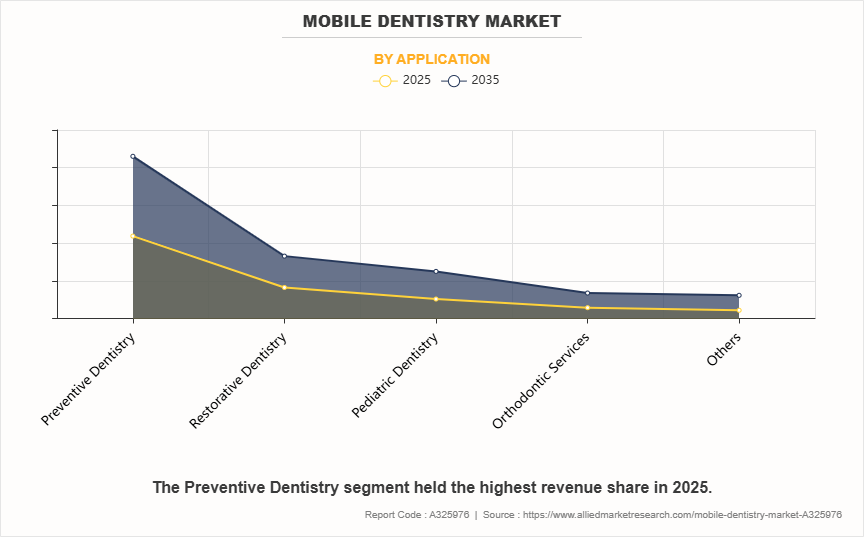
On the basis of application, the mobile dentistry industry is segmented into preventive dentistry, restorative dentistry, pediatric dentistry, orthodontic services, and others. The others segment is anticipated to grow at the fastest CAGR during the forecast period. Owing to the expanding scope of specialized and advanced dental procedures delivered through mobile platforms. This segment typically includes oral surgery, endodontic treatments, periodontics, prosthodontics, cosmetic dentistry, and emergency dental care. Increasing demand for on-site specialized services in rural communities, long-term care facilities, military bases, and corporate workplaces is driving growth in this category.
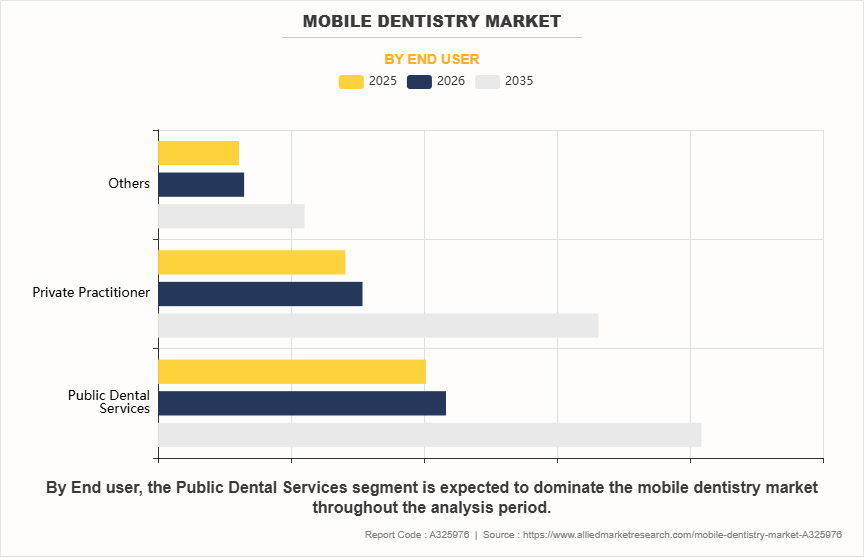
On the basis of end user, the mobile dentistry market is classified into public dental services, private practitioners, and others. The private practitioners segment is anticipated to grow at the fastest CAGR during the forecast period driven by increasing adoption of mobile dental units by private clinics to expand patient reach in mobile dental vehicles, offer convenient at‐‘home or community-based services, and enhance competitive advantage in urban and semi-urban markets.
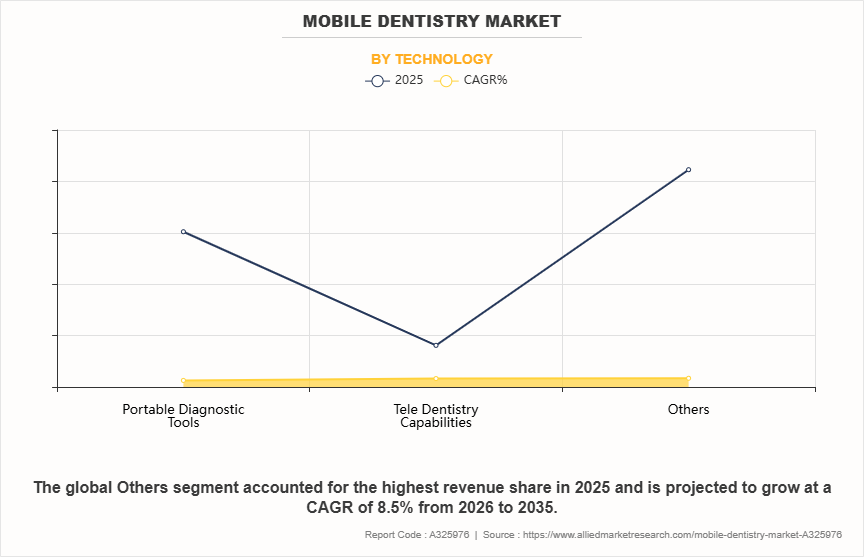
By technology, the others segment accounted for the largest mobile dentistry market share in 2025 and is expected to maintain its dominance during the forecast period. This is attributed to the widespread adoption of essential treatment and operational equipment, including AI-based diagnostic software, dental chairs, handpieces, suction and sterilization systems, and practice management solutions, which enable mobile units to deliver comprehensive, high-quality dental care efficiently across multiple procedures and patient volumes.
Competitive Landscape
Who Are the Key Players in the mobile dentistry Market and What Are Their Strategies?
Key players in the mobile dentistry market include Planmeca Oy, BPR Swiss GmbH, Aseptico inc, DNTLworks Equipment Corporation, A-dec Inc, Dentsply Sirona, DENTALEZ, Inc, Midmark Corporation, TAKARA BELMONT Corp, Foshan Anzhe Medical Instrument Co., Ltd.
- In June 2023, Planmeca has donated five mobile dental clinics to Ukraine to help deliver dental services in the war-torn country. Each mobile clinic is equipped with a high-tech Planmeca dental unit, an autoclave, and other necessary equipment and instruments needed to provide fundamental dental care
- In March 2025, Planmeca is excited to introduce new members to its dental unit family, representing the newest advancements in Planmeca dental units alongside its famous Planmeca CompactTM. The family of “Pros” consists of the previously released Planmeca Pro50TM. dental unit and Planmeca Pro50TM. Chair patient chair, as well as upcoming Planmeca Pro40TM. and Planmeca Pro50TM. S dental units – offering a Pro dental unit for every user.
- In February 2025, Aseptico Inc., a leading authority in clinical dental news in the U.S., has recognized the AsepticoR. AMC-15 Mobile Dental Cart as a Reader's Choice Top Innovative Product in its January/February 2025 issue.
- In January 2024, Midmark Corp., a leading animal health solutions provider dedicated to creating animal care environments that enhance care delivery, efficiency and safety, announced the launch of its redesigned Midmark Mobile Dental Delivery System. Following extensive product development research, this next-generation system integrates key features, tools and easy-to-read icons that streamline veterinary workflow. Its compact design stores under standard-height countertops, delivering on space-saving needs gathered during research interviews with veterinary professionals.
Technology, AI & Innovation (Future-Facing)
- AI-Assisted Oral Disease Prediction: Future mobile dentistry platforms are expected to use advanced AI algorithms to analyze patient history, imaging data, and lifestyle factors to predict the risk of dental diseases such as cavities, periodontal disease, and oral cancer at an early stage.
- AI-Integrated Teledentistry Ecosystems: The integration of AI with teledentistry platforms will enable automated preliminary diagnosis, virtual consultations, and AI-supported treatment recommendations, improving the efficiency of remote dental care delivery.
- Autonomous and Smart Mobile Dental Clinics: Next-generation mobile dental units may incorporate smart automation systems, digital workflows, and connected diagnostic devices to streamline operations and enable faster patient treatment in remote areas.
- Advanced Portable Imaging and 3D Scanning: Future mobile clinics are likely to adopt highly compact 3D intraoral scanners and handheld digital radiography systems, allowing dentists to perform detailed diagnostics and digital impressions directly at patient locations.
- 3D Printing for On-Site Dental Solutions: The use of compact dental 3D printers in mobile units could enable the rapid production of crowns, aligners, dentures, and dental models on-site, significantly reducing treatment time.
- IoT-Connected Dental Equipment: Internet of Things (IoT)-enabled dental devices will allow real-time monitoring of equipment performance, remote diagnostics, and predictive maintenance, ensuring efficient operation of mobile dental clinics.
- Augmented Reality (AR) for Dental Training and Procedures: AR technology may support dentists in complex procedures by providing real-time visual guidance and simulation-based training in mobile clinical environments.
- AI-Driven Population Oral Health Analytics: Mobile dentistry providers may increasingly use AI and big-data analytics to analyze large patient datasets, helping public health organizations identify oral health trends and plan targeted outreach programs.
Regional Insights
Which Region Dominates the Global Market and What Drives Its Leadership?
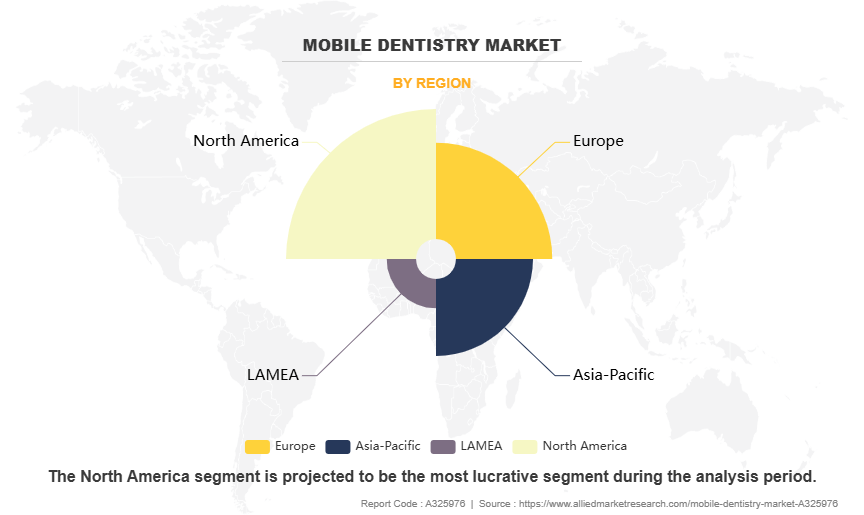
As per the global mobile dentistry market analysis, North America dominates the global mobile dentistry market, accounting for roughly 36–39% of the total global market share in 2024, making it the leading regional contributor to revenue and service deployment. The region benefits from a highly developed healthcare infrastructure, strong insurance coverage systems, and extensive government-supported oral health programs that promote preventive and community-based dental care. In the U.S. alone, over 3,000 mobile dental units are in operation, performing nearly 9 million procedures annually, through Medicaid-funded school and community outreach programs targeting underserved populations. North America also recorded about USD 470 million in market value for mobile dental clinic vehicles in 2024, reflecting significant investment in mobile healthcare infrastructure. In addition, high public awareness of oral health, favourable reimbursement policies, and the presence of leading dental equipment manufacturers and service providers accelerate adoption of mobile dental clinics across rural, elderly, and school populations. These factors collectively position North America as the most mature and technologically advanced market for mobile dentistry services globally, sustaining its leadership throughout the forecast period.
In Canada, disparities in access to dental care are similarly significant, particularly among Indigenous and remote communities. Statistics Canada (2024) reports that 32% of First Nations people living off reserve, 30% of Métis, and 29% of Inuit experienced unmet healthcare needs in the past 12 months, with geographic inaccessibility cited as a primary barrier. To address this, the Canadian government allocated US$9.5 billion over five years through the Canadian Dental Care Plan (CDCP) to provide coverage for up to 9 million uninsured Canadians with annual family incomes below US$65,700. This landmark investment is expected to drive sustained demand for community-based and mobile dental infrastructure. Additionally, the Non-Insured Health Benefits (NIHB) program served approximately 344,898 Indigenous dental clients in 2023–2024, with dental benefits accounting for over US$277 million in expenditure, highlighting the scale of federally supported mobile dental services in remote communities.
Government and private initiatives are reinforcing market momentum across North America. In July 2024, the Oklahoma Dental Foundation received USD 5.1 million in American Rescue Plan Act (ARPA) funds to expand its MobileSmiles program with five new mobile units, building on a 2023 deployment that served over 1,300 patients across 146 sites and delivered more than USD 600,000 in free dental services. Technological adoption is also accelerating, with tele-dentistry increasingly integrated into mobile dental operations. A 2024–2025 study published in the Journal of the American Dental Association found that 92.2% of U.S. jurisdictions now permit tele-dentistry, enabling mobile units to act as local care hubs connected to specialist networks. In January 2024, CD Newco LLC and Patient Prism launched an AI-powered cloud-based dental practice management integration, reflecting the growing convergence of mobile operations with digital and AI-enabled workflow solutions.
Strategic industry developments are further strengthening supply-side infrastructure. In February 2025, Planmeca and KaVo Dental North America expanded their North American headquarters to better serve regional partners and improve equipment distribution. Collectively, strong clinical demand, policy-driven funding, and rapid technological adoption position North America as the leading and most dynamically evolving region in the global mobile dentistry market.
What Role Does Government Policies Play in Mobile Dentistry Market?
- Funding and Grants for Mobile Clinics: Governments provide financial support, subsidies, and grants to healthcare providers and nonprofit organizations to deploy mobile dental units in remote and low-income communities.
- Public Health Programs: National and regional oral health initiatives, such as school-based dental programs and rural healthcare outreach programs, encourage the use of mobile dentistry to deliver preventive and basic dental treatments.
- Insurance and Reimbursement Policies: Supportive reimbursement frameworks under public insurance programs (e.g., Medicaid-type schemes in several countries) allow dental providers to receive payment for services delivered through mobile dental clinics.Regulatory Frameworks and Licensing: Governments establish standards for mobile dental unit equipment, infection control, patient safety, and practitioner licensing, ensuring quality and safe delivery of dental care.
- Rural Healthcare Development Policies: Policies aimed at reducing healthcare disparities promote mobile dentistry as a cost-effective solution for improving dental access in rural and geographically isolated areas.
- Partnerships with Public Institutions: Governments collaborate with schools, community centers, military bases, and elder care facilities to integrate mobile dental services into public healthcare systems.
- Tax Incentives and Infrastructure Support: Some regions offer tax benefits or infrastructure assistance to healthcare providers investing in mobile healthcare technologies and vehicles.
- Emergency and Disaster Response: During public health emergencies or disasters, governments deploy mobile dental units to maintain continuity of oral healthcare services.
Risk, Challenges & Future Outlook?
High Initial Costs of Mobile Dental Equipment
The mobile dentistry market faces a significant restraint in the form of high initial costs associated with acquiring advanced portable dental equipment. Devices such as portable X-ray units, handheld digital scanners, intraoral cameras, and laser treatment tools require substantial upfront investment, which can be a barrier for smaller dental practices and community dental programs with limited budgets. While these units are smaller and more compact than traditional clinic-based equipment, they are often designed with advanced technology that increases manufacturing and procurement costs. In addition, integrating tele-dentistry platforms, digital imaging systems, and practice management software adds further expense, potentially delaying adoption among end users. Public dental services in developing regions may struggle to allocate sufficient funds for such sophisticated equipment, limiting market penetration. Moreover, ongoing maintenance, calibration, and potential need for periodic software upgrades can add to operational expenses. These high costs can discourage small private practitioners or NGOs from investing in mobile dental solutions, slowing down overall market growth. Consequently, while mobile dentistry offers unparalleled convenience and accessibility, the financial barrier posed by advanced portable equipment remains a key challenge to widespread adoption.
Operational and logistical challenges
Operational and logistical challenges pose another constraint to the growth of the mobile dentistry market. Effectively deploying mobile units requires careful planning regarding transportation, route optimization, and scheduling of dental services across multiple locations. Although the report excludes vehicles themselves, the efficiency of mobile dental equipment depends on seamless integration with mobile units, power sources, and environmental control systems. Inadequate infrastructure at remote locations such as unreliable electricity supply, poor internet connectivity for tele-dentistry platforms, and insufficient storage space can limit the performance and utilization of portable dental tools. In addition, dental professionals need specialized training to operate compact and multifunctional devices efficiently, and managing sterilization, infection control, and equipment maintenance in mobile settings presents additional hurdles. Weather conditions, road access, and patient attendance variability further complicate operations. These logistical and operational complexities can reduce equipment utilization rates and increase costs per patient served, constraining revenue generation and slowing market adoption. Addressing these challenges requires coordinated planning, investment in user-friendly equipment, and support systems for field operations, which not all dental providers may be able to implement immediately.
Delivered Customizations
We have successfully delivered the following deep-dive customizations:
| CLIENT REQUEST | CUSTOMIZATION DELIVERED | VALUE ADDS |
| Market Share Analysis | Global Market Share Analysis for the year 2025 (Upto 10) | Provides insights into leading players’ strengths, geographic presence, and growth strategies; enables benchmarking, partnership evaluation, and investment opportunity identification |
| Pricing Analysis | Regional Pricing Analysis for the year 2025 | Helps identify regional pricing variations influenced by service mix, operational costs, and reimbursement policies; supports pricing optimization and market entry strategy |
Top Player’s Company Profiles
- Planmeca Oy
- BPR Swiss GmbH
- Aseptico inc.
- DNTLworks Equipment Corporation
- A-dec Inc.
- Dentsply Sirona
- DENTALEZ, Inc.
- Midmark Corporation
- TAKARA BELMONT Corp.
- Foshan Anzhe Medical Instrument Co., Ltd.
Mobile Dentistry Market Key Market Trends
Rising Adoption of Portable and Compact Dental Technologies
Dental providers are increasingly adopting portable dental chairs, carts, and imaging devices that allow treatments to be delivered outside traditional clinics. These compact and lightweight systems enable dentists to provide preventive, diagnostic, and therapeutic services in schools, rural communities, and long-term care facilities.
Integration of Tele-Dentistry and Digital Health Platforms
Tele-dentistry solutions and cloud-connected diagnostic tools are being integrated into mobile dental units, enabling remote consultations, digital patient records, and real-time communication with specialists. This digital transformation improves treatment efficiency and expands access to dental expertise in remote regions.
Growing Government and Public Health Outreach Programs
Governments, NGOs, and public health agencies are increasingly deploying mobile dental clinics for school-based oral health programs and community outreach initiatives. In 2024 alone, more than 1.8 million students received oral healthcare through mobile dental services, highlighting the growing role of public health initiatives.
Expansion in Emerging Markets
Adoption of mobile dentistry services market is growing rapidly in developing regions such as Asia-Pacific and Latin America, where improving oral health awareness and investments in healthcare infrastructure are driving demand for cost-effective dental service delivery models.
Increasing Demand for Geriatric and Community-Based Dental Care
The global aging population and rising prevalence of oral diseases are increasing demand for mobile dental units that provide services in nursing homes, community centers, and assisted-living facilities. Mobile dentistry offers convenient and accessible care for elderly patients with limited mobility.
Technological Innovation in Mobile Dental Equipment
Planmeca Oy, BPR Swiss GmbH, Aseptico inc, DNTLworks Equipment Corporation, A-dec Inc, Dentsply Sirona, DENTALEZ, Inc, Midmark Corporation, TAKARA BELMONT Corp, Foshan Anzhe Medical Instrument Co., Ltd are introducing advanced mobile units with features such as antimicrobial surfaces, modular cabinetry, battery-powered systems capable of 12-hour operation, and integrated imaging technologies to improve treatment capabilities and infection control.
Mobile Dentistry Market AMR Analysis
AMR’s is our Business Information Services team that Collects, Collates, Correlates, and Analyses the Data collected using Primary Exploratory Research backed by robust Secondary Desk research.
As per AMR analysis, the mobile dentistry market is witnessing steady growth due to increasing demand for accessible dental care in rural and underserved areas, rising adoption of portable and advanced dental equipment, and expanding school-based and community oral health programs. However, the market faces certain restraints such as high initial costs of mobile dental units market, regulatory and licensing complexities, and limited awareness of mobile dental services in some developing regions. North America is expected to dominate the market owing to well-established healthcare infrastructure, strong government support for community dental programs, and a growing elderly population requiring convenient dental care services. Nevertheless, several growth opportunities are emerging, including the integration of tele-dentistry and digital technologies, expansion of mobile healthcare initiatives in emerging economies, and increasing collaborations between healthcare providers, governments, and non-profit organizations to improve oral healthcare accessibility.
Key Benefits For Stakeholders
- This report provides a quantitative analysis of the market segments, current trends, estimations, and dynamics of the mobile dentistry market analysis from 2025 to 2035 to identify the prevailing mobile dentistry market opportunity.
- The market research is offered along with information related to key drivers, restraints, and opportunities.
- Porter's five forces analysis highlights the potency of buyers and suppliers to enable stakeholders make profit-oriented business decisions and strengthen their supplier-buyer network.
- In-depth analysis of the mobile dentistry market segmentation assists to determine the prevailing market opportunities.
- Major countries in each region are mapped according to their revenue contribution to the global market.
- Market player positioning facilitates benchmarking and provides a clear understanding of the present position of the market players.
- The report includes the analysis of the regional as well as global mobile dentistry market trends, key players, market segments, application areas, and market growth strategies.
Mobile Dentistry Market Report Highlights
| Aspects | Details |
 Market Size By 2035 | USD 849.5 million |
 Growth Rate | CAGR of 7.7% |
 Forecast period | 2025 - 2035 |
 Report Pages | 323 |
 By Product |
|
 By Application |
|
 By End user |
|
 By Technology |
|
 By Region |
|
 Key Market Players | Planmeca Oy, Foshan Anzhe Medical Instrument Co., Ltd., Aseptico inc., A-dec Inc., Dentsply Sirona, BPR Swiss GmbH, TAKARA BELMONT Corp., Dntlworks, DENTALEZ, Inc., Midmark Corporation |
Analyst Review
The mobile dentistry market is expected to witness a steady increase in demand during the forecast period. The rising emphasis on accessible and community-based oral healthcare, along with the growing need to bridge service gaps in rural and underserved regions, is expected to drive market growth. Mobile dentistry plays a critical role in delivering preventive, diagnostic, and basic restorative care directly to patients, making it an integral component of modern outreach healthcare models. As healthcare systems increasingly focus on expanding coverage, reducing patient acquisition costs, and improving service flexibility, mobile dental units provide an efficient solution by bringing clinical infrastructure directly to the point of care.
The demand for mobile dentistry is particularly evident in schools, nursing homes, corporate workplaces, and remote communities, where access to traditional dental clinics may be limited or inconvenient. In these settings, mobile units enable faster service deployment, improved patient compliance, and continuity of care. By integrating dental chairs, imaging systems, sterilization equipment, and digital record management into compact mobile setups, providers are replicating essential clinic functions while maintaining mobility. This approach enhances operational efficiency, reduces infrastructure investment, and allows providers to scale services based on regional demand, making mobile dentistry increasingly attractive for public health programs and private practitioners alike.
Moreover, the growing focus on preventive care and value-based healthcare delivery is a key driver for the adoption of mobile dentistry solutions. As governments and healthcare organizations prioritize early diagnosis, routine screenings, and community-level interventions, the need for flexible and outreach-oriented dental services continues to rise. Technological advancements introduced by companies such as A-dec Inc., Dentsply Sirona Inc., and DENTALEZ Group have enhanced the portability, reliability, and digital integration of mobile dental equipment. As stakeholders aim to improve oral health outcomes while maintaining cost efficiency and service quality, the adoption of mobile dentistry models is expected to increase significantly during the forecast period.
North America is the largest share in Mobile Dentistry Market
Growing demand for accessible dental care in rural and underserved areas and integration of tele-dentistry and digital health technologies are the key market trend for Mobile Dentistry Market.
Technological advancements in portable dental equipment, and rising healthcare costs and demand for cost-effective solutions are the key drivers of mobile dentistry market.
Planmeca Oy, BPR Swiss GmbH, Aseptico inc, DNTLworks Equipment Corporation, A-dec Inc, Dentsply Sirona, DENTALEZ, Inc, Midmark Corporation, TAKARA BELMONT Corp, Foshan Anzhe Medical Instrument Co., Ltd are the mobile dentistry market.
The global mobile dentistry market was valued at $0.4billion in 2025, and is projected to reach $0.8 billion by 2035, registering a CAGR of 7.7% from 2026 to 2035.
Loading Table Of Content...
Loading Research Methodology...