
Sexual Wellness Market Overview
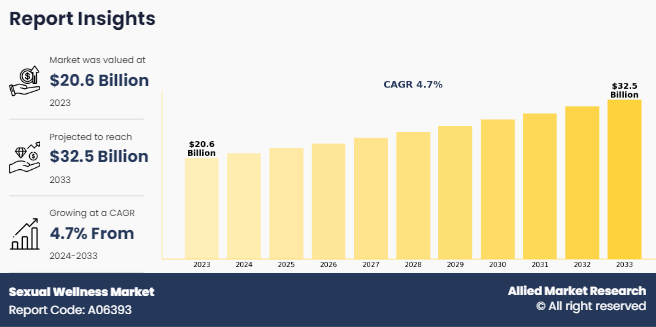
The global sexual wellness market size was valued at $20.6 billion in 2023 and is projected to reach $32.5 billion by 2033, growing at a CAGR of 4.7% from 2024 to 2033. Sexual wellness products, such as lubricants, sprays, and condoms, are designed to enhance sexual pleasure, promote safer sexual practices, and contribute to overall sexual well-being.
Key Market Insights
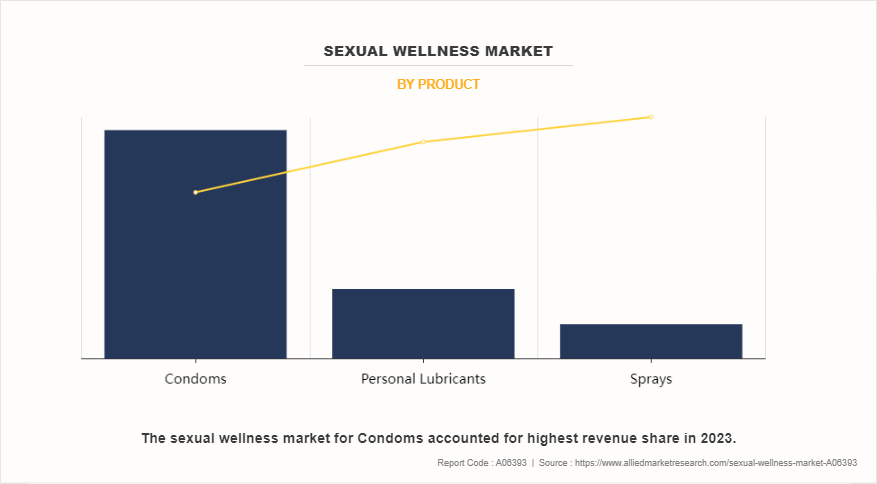
By product, the condoms segment held the largest share in the sexual wellness market size for 2023. Market Data Forecast
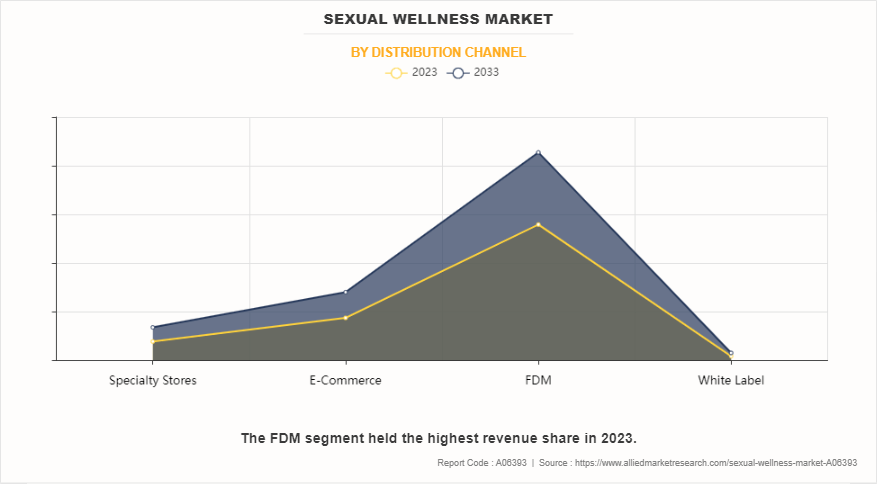
By distribution channel, the FDM (Fast-Moving Distribution) segment held the largest share in the sexual wellness market for 2023. Market Data Forecast
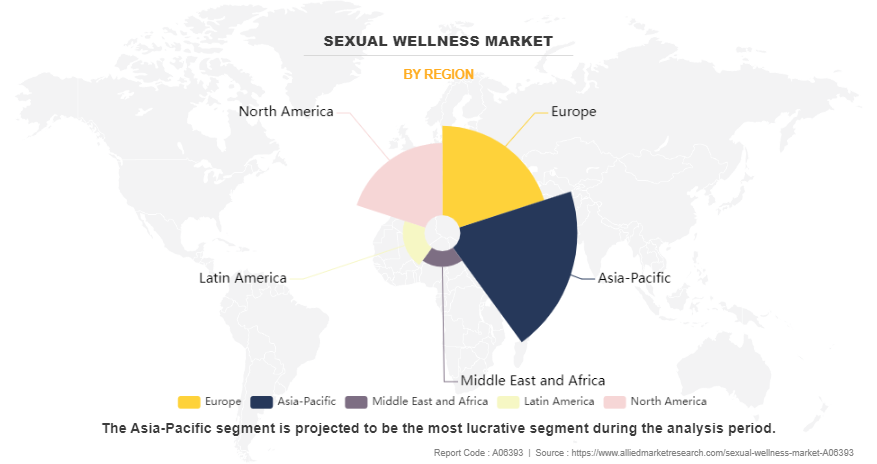
By region, Asia-Pacific held the largest share in the sexual wellness market for 2023. Market Data Forecast
Latin America is anticipated to grow at the highest CAGR during the sexual wellness market forecast period. Market Data Forecast
Market Size & Forecast
- 2033 Projected Market Size: USD 32.5 Billion
- 2023 Market Size: USD 20.6 Billion
- Compound Annual Growth Rate (CAGR) (2024–2033): 4.7%
- Asia-Pacific: Dominated market share during the forecast period Market Data Forecast
- Latin America: Highest CAGR during the forecast period
Sexual wellness refers to a holistic approach to sexual health, encompassing physical, emotional, and psychological well-being. It focuses on safe, satisfying, and consensual sexual experiences while addressing reproductive health, prevention of sexually transmitted infections (STIs), and personal hygiene. The growing awareness of sexual wellness has led to increased demand for products and services that enhance intimacy, comfort, and confidence, making it a key segment within the broader health and wellness industry.
Applications such as condoms and lubricants are widely used for protection against STIs and unintended pregnancies while enhancing sexual comfort. Sprays, wipes, and hygiene products promote cleanliness and freshness, boosting user confidence. Sexual health supplements and intimate care products support overall reproductive health and performance. Counseling, educational programs, and digital platforms provide guidance on sexual health, relationships, and emotional well-being. Additionally, sexual wellness has expanded into lifestyle and personal care, integrating with self-care routines and wellness-focused products. As societal attitudes become more progressive, the sexual wellness market continues to grow, driven by the desire for safe, pleasurable, and health-conscious sexual experiences.
Key Takeaways
- By product, the condoms segment dominated the global market in 2023.
- By distribution channel, the FDM segment dominated the market in terms of revenue in 2023.
- By region, Asia-Pacific dominated the market in terms of revenue in 2023. However, Latin America is anticipated to grow at the highest CAGR during the forecast period.
Key Market Dynamics
Societal attitudes toward sexuality and sexual well-being have shifted significantly, leading to increased awareness, acceptance, and openness in discussing sexual health. This change has driven greater demand for sexual wellness products. Awareness campaigns, education, and advocacy initiatives play a key role by informing individuals about the benefits, availability, and effectiveness of products such as condoms, lubricants, and sprays, encouraging their integration into daily sexual health practices.
Health and wellness trends further contribute to market growth by promoting a culture of self-care and holistic well-being. As individuals prioritize their physical, mental, and emotional health, they increasingly seek products and services that support overall well-being, including sexual health. This shift in consumer mindset has fueled demand for natural, safe, and effective sexual wellness products. In response, companies are innovating and diversifying their offerings, introducing supplements, vitamins, and natural remedies designed to enhance libido, sexual performance, and overall satisfaction.
As health-conscious consumers become more informed and proactive about their sexual health, they are increasingly willing to invest in products that align with their values and lifestyles. This trend has created opportunities for premium and niche sexual wellness products tailored to specific needs. Growing acceptance and normalization of sexual wellness discussions have further fueled market growth, as individuals feel more comfortable seeking and purchasing products that enhance their sexual well-being. Health and wellness trends continue to act as a catalyst, driving innovation, consumer engagement, and broader market penetration.
Rising incidences of HIV and other sexually transmitted infections (STIs) have boosted demand for condoms, contraceptives, and related sexual wellness products. Condoms, in particular, are popular among millennials for reducing risks of both pregnancy and STIs. Government and NGO initiatives promoting free condom distribution to combat overpopulation and protect public health further support market expansion.
Social marketing campaigns, targeted promotions, and both public and private distribution channels have proven effective in raising awareness and driving condom use. This strategy has gained significant traction in developing countries, such as China and India, further contributing to the growth of the sexual wellness market.
The growing millennial population is a key driver of the sexual wellness market, as younger consumers show increased interest in sexual health products. In India, over 50% of the population is under 25, and more than 65% is under 35 as of 2022, which supports the rising demand.
Gender equality, women’s empowerment, and financial independence enable women to make autonomous purchasing decisions, positioning them as independent buyers of condoms and contraceptives. Increased acceptance of the LGBT community further expands the market, with products tailored for diverse needs, such as double dildos, tongue and nipple vibes for lesbian couples, and cock rings, butt plugs, and anal dildos for gay couples.
Changes in lifestyles and relationship dynamics also drive market growth. Modern, stressful lifestyles contribute to sexual issues like low libido, performance anxiety, and intimacy challenges, creating demand for supplements, therapeutic treatments, and sexual health education. Evolving relationship structures and a stronger focus on communication and consent encourage consumers to seek solutions that enhance intimacy, satisfaction, and emotional connection.
Shifting societal norms around sexuality and relationships have created a more open and accepting environment for sexual wellness discussions. This has increased awareness, reduced stigma, and encouraged individuals to prioritize their sexual health, driving innovation and growth in the sexual wellness market through new products, services, and educational resources.
However, modern lifestyles marked by stress, hectic schedules, and psychological or medical conditions can reduce sexual activity. Factors such as low testosterone, certain medications, restless legs syndrome (RLS), depression, chronic illness, sleep disturbances, and aging affect sexual stamina and interest in both men and women. Research shows men with RLS are at higher risk of erectile dysfunction (ED). These challenges may decrease sexual activity, potentially lowering demand for sexual wellness products, particularly sex toys, condoms, and female contraceptives.
Segments Overview
The sexual wellness market analysis is segmented into product, distribution channel, and region. By product, the market is divided into personal lubricants, sprays, and condoms. By distribution channel, the market is divided into specialty stores, e-commerce, FDM, and white labels. Region-wise, the market is analyzed across North America, Europe, Asia-Pacific, Latin America, and Middle East and Africa
By Product
By product, the condoms segment held the major share of the market in 2023, owing to increased public health awareness of sexually transmitted infections (STIs) and unintended pregnancies. Condoms are widely recognized as an effective method of preventing the transmission of STIs, including HIV/AIDS, gonorrhea, chlamydia, and syphilis. In addition, condoms serve as a barrier contraceptive method that helps reduce the risk of unintended pregnancies. Public health campaigns, educational initiatives, and advocacy efforts that promote safe sex practices emphasize the importance of condom use, driving the demand for condoms during the sexual wellness market forecast.
By Distribution Channel
By distribution channel, the FDM segment held the major sexual wellness market share in 2023 and is expected to maintain its dominance during the forecast period. FDM retailers provide a convenient one-stop shopping experience for consumers, offering a wide range of products, including sexual wellness items.
The availability of sexual wellness products in grocery stores, drugstores, and mass merchandise outlets makes them easily accessible to a broad customer base. This convenience factor drives the demand for sexual wellness products in the FDM sector. FDM retailers have established trust and familiarity with consumers over the years. People often prefer to shop for personal care and health-related products from these trusted sources which is expected to propel the growth of the sexual wellness industry
By Region
Region-wise, Asia-Pacific held the major market share of the market in 2023. Global brands strive among themselves to deliver better value propositions and effective marketing strategies. Asia-Pacific is projected to grow at the highest CAGR, owing to urbanization and exposure to Western influences have played a significant role in shaping attitudes toward sexual wellness in the Asia-Pacific region. As people migrate to urban centers and engage with global trends, there is greater exposure to Western sexual norms and practices. This exposure has contributed to increased acceptance of sexual wellness products and a desire to explore and adopt new products and experiences and is expected to contribute to sexual wellness market statistics.
Competitive Analysis
Competitive analysis provides valuable insights into the competitive landscape of a market by evaluating key players, their strengths, weaknesses, strategies, and market positioning. It involves assessing factors such as market share, product offerings, pricing strategies, distribution channels, and customer perception. By analyzing competitors' actions and reactions, businesses identify opportunities, anticipate threats, and make informed decisions to gain a competitive advantage.
This analysis helps in understanding market trends, customer preferences, and industry dynamics, enabling companies to refine their strategies, innovate products, improve customer experiences, and effectively position themselves in the market. Competitive analysis facilitates strategic planning and enhances competitiveness in a dynamic business environment.
Major players such as Bijoux indiscrets, California exotic novelties, Church and dwight co. have adopted partnership, agreement, and acquisition as key developmental strategies to improve the product portfolio of the sexual wellness market.
Regional Outlook
Region-wise, Asia-Pacific held the major market share of the market in 2023. Global brands are competing to deliver stronger value propositions and implement more effective marketing strategies. The Asia-Pacific region is projected to grow at the highest CAGR, driven by rapid urbanization and increasing exposure to Western influences, which have significantly shaped attitudes toward sexual wellness. As people migrate to urban centers and engage with global trends, they gain greater exposure to Western sexual norms and practices. This exposure has fostered increased acceptance of sexual wellness products and a willingness to explore and adopt new products and experiences, which is expected to further drive growth in the sexual wellness market.
How Are Consumer Preferences Shaping Market Trends?
Consumer preferences play a critical role in shaping market trends, as businesses increasingly tailor their products, services, and marketing strategies to meet evolving demands. Today’s consumers prioritize convenience, quality, personalization, and sustainability, influencing companies to innovate and adapt. For example, a growing focus on health and wellness has driven demand for natural, safe, and functional products across industries, from food and beverages to personal care and sexual wellness.
In the digital era, consumers also seek seamless online experiences, transparent information, and socially responsible brands, prompting businesses to invest in e-commerce, digital marketing, and ethical practices. Shifts in demographics, lifestyles, and cultural attitudes further influence preferences, shaping demand for niche products, premium offerings, and inclusive solutions tailored to diverse audiences.
By monitoring and responding to consumer behavior, companies can anticipate trends, identify gaps, and develop competitive advantages. Consumer-driven innovation not only helps businesses satisfy current needs but also guides the evolution of industries, ensuring products, services, and experiences remain relevant, engaging, and aligned with changing expectations.
What Technological Innovations Are Creating New Growth Opportunities?
Technological innovations are creating significant growth opportunities across industries by enabling the development of new products, enhancing efficiency, and transforming customer experiences. In the consumer goods and wellness sectors, advancements in digital technology, e-commerce platforms, and mobile applications have expanded access to products and services, allowing businesses to reach wider audiences and personalize offerings.
In the sexual wellness market, innovations such as app-connected devices, wearable technology, and smart sex toys are enhancing user experiences by providing customizable features, real-time feedback, and educational guidance. Similarly, advancements in product formulation, such as natural, organic, and bioactive ingredients, allow companies to develop safer and more effective sexual wellness products, including lubricants, supplements, and contraceptives.
Data analytics and artificial intelligence (AI) also play a pivotal role in identifying consumer preferences, predicting trends, and optimizing marketing strategies, enabling brands to make data-driven decisions and improve customer engagement.
Additionally, digital health solutions, telemedicine, and online counseling platforms are expanding access to sexual health education, therapy, and support services, creating new revenue streams and fostering market growth.
Overall, technological innovations not only enhance product performance and user experience but also open new avenues for market expansion, driving innovation, consumer engagement, and competitive advantage in dynamic industries.
Which Segment Holds the Largest Market Share and Why?
In the sexual wellness market, the condoms segment holds the largest market share, primarily due to their widespread recognition, accessibility, and dual functionality as both a contraceptive and a preventive measure against sexually transmitted infections (STIs), including HIV/AIDS. Condoms are widely promoted through public health campaigns, government initiatives, and NGO programs, which increase awareness and usage, particularly in developing regions.
The segment’s dominance is also driven by strong consumer trust, affordability, and the convenience of use, making condoms a preferred choice across diverse age groups and demographics. Millennials and younger populations, who are increasingly health-conscious and open to discussions around sexual wellness, contribute significantly to demand.
Additionally, social marketing, online distribution, and the availability of innovative and value-added variants—such as flavored, ultra-thin, and textured condoms—have further strengthened market penetration. Government-backed free or subsidized distribution programs, particularly in countries with high STI prevalence, reinforce the segment’s growth.
Overall, the combination of accessibility, safety, affordability, and consumer trust makes condoms the largest and most consistently growing segment within the sexual wellness market.
How Are Consumer Preferences Shaping Market Trends?
Consumer preferences are increasingly driving market trends as businesses adapt to evolving expectations for quality, convenience, personalization, and ethical practices. In the sexual wellness market, consumers prioritize safety, effectiveness, and natural or organic ingredients, prompting companies to innovate with products such as lubricants, condoms, supplements, and intimate care solutions that align with these values.
Demographic shifts, including the growing millennial and Gen Z populations, are shaping demand for inclusive, diverse, and discreet products. Consumers are also seeking educational resources, wellness guidance, and digital solutions, encouraging brands to develop app-connected devices, telehealth services, and online counseling platforms.
Lifestyle changes, such as busy schedules and heightened health awareness, influence the types of products purchased, while social acceptance of discussions around sexual health increases willingness to explore new offerings.
By closely monitoring consumer behavior, companies can anticipate trends, address unmet needs, and design products and services that resonate with target audiences. Consumer-driven insights thus not only guide product innovation but also determine marketing strategies, distribution channels, and overall market growth.
Key Benefits For Stakeholders
- This report provides a quantitative analysis of the market segments, current trends, estimations, and dynamics of the sexual wellness market analysis from 2023 to 2033 to identify the prevailing sexual wellness market opportunities.
- The market research is offered along with information related to key drivers, restraints, and opportunities.
- Porter's five forces analysis highlights the potency of buyers and suppliers to enable stakeholders to make profit-oriented business decisions and strengthen their supplier-buyer network.
- An in-depth analysis of the sexual wellness market segmentation assists to determine the prevailing market opportunities.
- Major countries in each region are mapped according to their revenue contribution to the global market.
- Market player positioning facilitates benchmarking and provides a clear understanding of the present position of the market players.
- The report includes an analysis of the regional as well as global sexual wellness market trends, key players, market segments, application areas, and market growth strategies.
Sexual Wellness Market Report Highlights
| Aspects | Details |
 Forecast period | 2023 - 2033 |
 Report Pages | 315 |
 By Product |
|
 By Distribution channel |
|
 By Region |
|
 Key Market Players | California Exotic Novelties, Bijoux Indiscrets SL, Trigg Laboratories, Inc., Adam and Eve, Karex Berhad, Wicked Sensual Care, Church & Dwight Co., Inc., CC Wellness, Doc Johnson Enterprises, Inc., Westridge Laboratories, Inc., Tenga Co., Ltd., Pjur Group Luxembourg S.A., BioFilm, Inc., Reckitt Benckiser Group PLC, Kessel Medintim GmbH |
Analyst Review
As per the perspective of top-level CXOs, the global sexual wellness market is expected to unleash attractive business opportunities in developing economies, however, is dealing with challenges simultaneously. With the increase in STDs, STIs, and per capita income, developing economies are further expected to emerge as major markets for sexual wellness products in a decade. However, an increase in interest in sexual wellness products and their awareness among consumers further boosts the market growth. Increased innovations and improvisation in sexual wellness products have further aided the growth of the sexual wellness market, for instance, silicone-lubricated condoms gained immense popularity in developed countries including, the U.S. Germany, Norway, Sweden, and Japan.
Moreover, government initiatives and NGO campaigns are helping to spread awareness regarding the use of sexual wellness products, including condoms and lubricants. Governments in various regions, including Asia-Pacific and Latin America distribute free condoms to control the population and reduce sexually transmitted infections.
Key players in the market have adopted new product launches, continuous innovation, and acquisition as their key developmental strategies to fulfill the rise in demand for advanced and improved sexual wellness products.
The global sexual wellness market size was valued at $20.6 billion in 2023 and is projected to reach $32.5 billion by 2033
The global sexual wellness market is projected to grow at a compound annual growth rate of 4.7% from 2024 to 2033, $32.5 billion by 2033
Asia-Pacific is the largest regional market for sexual wellness.
The key players profiled in the sexual wellness market analysis include Bijoux indiscrets, California exotic novelties, Church and dwight co., Doc johnson enterprises, Karex berhad, Kessel medintim GmbH, Reckitt benckiser group plc, Tenga co, Astroglide, Trigg laboratories, Pjur, Wicked sensual care, Westridge labs, and Adam and Eve.
Health and wellness trends play a pivotal role in driving the growth of the sexual wellness market by fostering a culture of self-care and holistic well-being.
Loading Table Of Content...
Loading Research Methodology...