
Apple Cider Vinegar Market Research, 2034
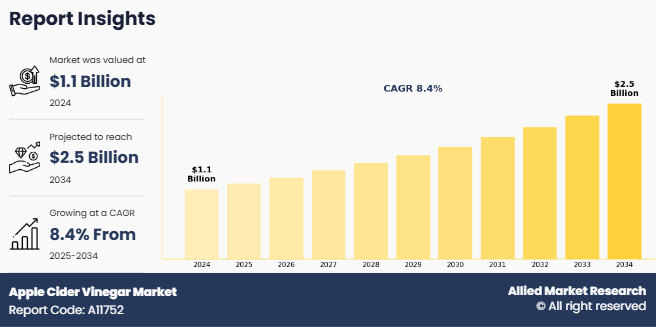
The global apple cider vinegar market was valued at $1.1 billion in 2024, and is projected to reach $2.5 billion by 2034, growing at a CAGR of 8.4% from 2025 to 2034. Apple cider vinegar (ACV) is a type of vinegar made from fermented apple juice. It is produced by crushing apples, extracting the juice, and allowing it to undergo fermentation, where natural sugars are converted into alcohol and then into acetic acid. This acetic acid gives ACV its strong sour taste and distinct aroma. It is commonly used in cooking, food preservation, and salad dressings, and is also popular for its perceived health and wellness benefits.
Market Dynamics
Rising health and wellness awareness is a major factor driving the apple cider vinegar market growth, as consumers increasingly seek natural and functional products to incorporate into their daily routines. With growing interest in digestive health, detoxification, weight management, and immunity, ACV is widely perceived as a simple and affordable solution that aligns with these wellness goals. The shift toward clean-label and chemical-free products further encourages consumers to choose ACV over synthetic supplements or processed ingredients. Its popularity has also been amplified through social media, health influencers, and wellness communities, making it a familiar item in households across age groups.
In addition, the rise in e-commerce has further accelerated the growth of the apple cider vinegar market by offering consumers a wide range of brands, product types, and package sizes at competitive prices. Online platforms also enable niche, organic, and premium ACV brands to reach customers beyond geographical limitations, supported by targeted advertisements and subscription models. With greater convenience, product comparison options, and user reviews, consumers feel more confident in trying new or specialized ACV products. This omnichannel presence ultimately reinforces demand, enhances market penetration, and supports steady growth of the apple cider vinegar market demand.
The trend of preventive healthcare is pushing individuals to adopt healthier habits, where ACV is positioned as a natural remedy with multiple perceived benefits. This heightened awareness has led to increased experimentation in home remedies, functional beverages, and holistic diets, all of which incorporate apple cider vinegar as a versatile ingredient. As consumers prioritize immunity and gut health, especially post-pandemic—manufacturers are responding by introducing organic, raw, unfiltered, and infused varieties to cater to evolving preferences. This strong alignment with wellness trends is expected to support continued expansion of the apple cider vinegar industry.
The rapid evolution of event technology is a major driver for the apple cider vinegar market forecast. Advanced tools and platforms for registration management, ticketing, virtual conferencing, hybrid events, and attendee engagement have streamlined the planning and execution process. Companies now increasingly rely on software solutions that allow them to manage invitations, registrations, payments, schedules, and on-site check-ins efficiently, reducing manual errors and enhancing the attendee experience. According to the Professional Convention Management Association (PCMA), over 60% of U.S.-based event organizers now integrate specialized event tech platforms to optimize operations. Moreover, innovations in virtual event platforms and immersive technologies, such as augmented reality and live streaming, enable corporates to host global events without geographic constraints, expanding their audience reach and participation. Event organizers and agencies benefit from this technological adoption by delivering more sophisticated, data-driven, and measurable events.
However, the availability of close substitutes acts as a significant restraint to the apple cider vinegar (ACV) market because consumers can easily shift to other vinegar types that offer similar functionality. Products such as white vinegar, rice vinegar, and sherry vinegar are widely accessible through supermarkets, online platforms, and local retail stores, often at lower or comparable prices. These alternatives can deliver nearly the same culinary and household benefits, reducing the need for consumers to specifically choose ACV. This ease of substitution weakens brand loyalty, especially among price-sensitive buyers or those who do not perceive a major difference in performance across vinegar types.
Innovation in product formats is expected to create significant opportunities in the apple cider vinegar market share by expanding its appeal to a wider consumer base. Traditionally, apple cider vinegar has been consumed in its raw or liquid form, which may not be preferred by all consumers due to its strong taste and acidity. By introducing new formats such as flavored ACV drinks, gummies, capsules, effervescent tablets, and ready-to-mix powders, manufacturers can make the product more convenient, palatable, and user-friendly. These innovations help address common barriers to consumption while attracting health-conscious customers who seek easy and enjoyable ways to incorporate ACV into their daily routines.
Innovative product formats allow brands to differentiate themselves in a competitive landscape and tap into emerging wellness trends. Functional beverages infused with ACV, organic or unfiltered premium variants, and formulations blended with ingredients like honey, ginger, or herbs enhance perceived health benefits and drive premiumization. Such products also perform well across modern retail and e-commerce channels, where consumers actively look for unique, value-added offerings. As demand grows for natural, convenient, and multifunctional health products, innovative ACV formats provide manufacturers with a strategic opportunity to boost market penetration, improve brand visibility, and capture new customer segments.
The global beauty and personal care industry is witnessing strong growth, driven by social media influence, beauty bloggers, and increased consumer willingness to try natural remedies. This trend allows ACV brands to position their products within premium and specialty beauty categories, creating opportunities for higher margins and product diversification. Companies can collaborate with dermatologists, cosmetic formulators, and influencers to develop targeted solutions that highlight the skin and hair benefits of ACV. As a result, the expanding role of ACV in beauty and personal care is expected to significantly contribute to market growth by attracting new consumer segments and enhancing brand visibility.
Segmental Overview
The global apple cider vinegar market is segmented into source, form, distribution channel, and region. By source, it is classified as conventional and organic. By form, the market is categorized into liquid and others. By distribution channel, it is divided into online stores, specialty stores, supermarkets/hypermarket and others.
By Source
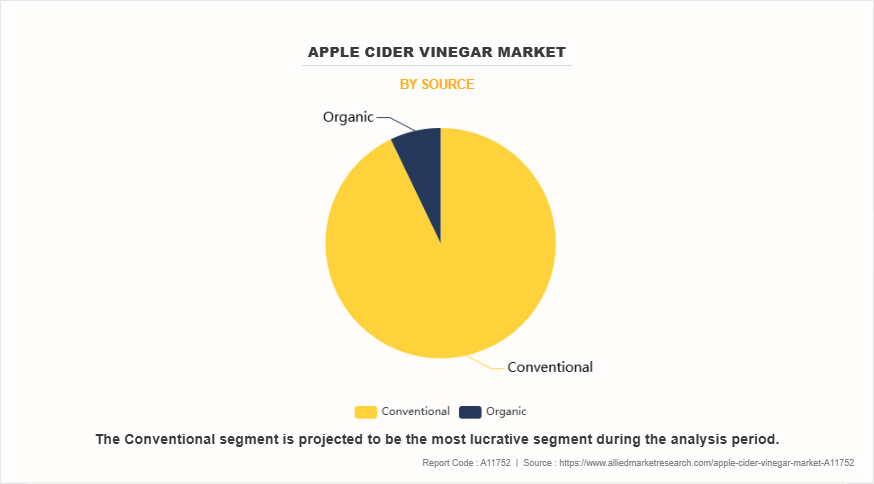
By source, the conventional segment dominated the apple cider vinegar market in 2024 owing to its affordability, wide availability, and strong preference among mass consumers for everyday culinary and household purposes. Its extensive distribution network and lower production costs further reinforced its leading share.
By Form
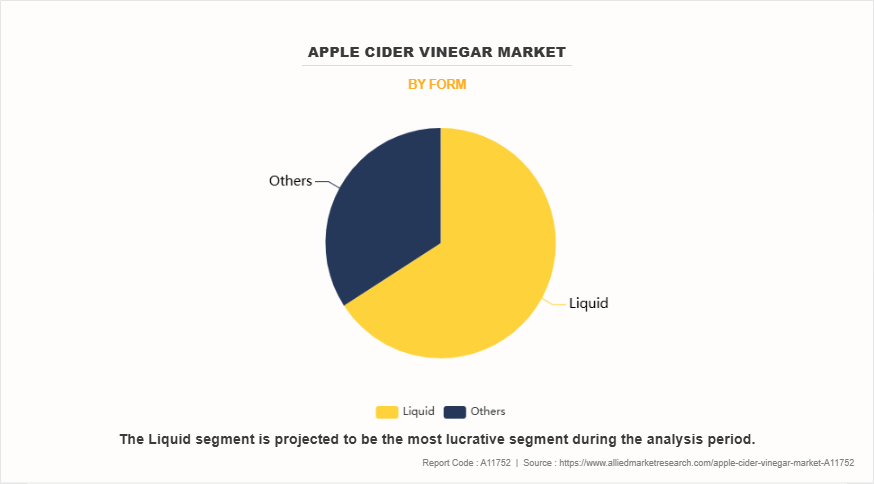
By form, the liquid segment led the apple cider vinegar market in 2024, as it remains the most commonly used and accessible format for cooking, home remedies, and general household applications. Its convenience and lower processing requirements continue to drive higher demand.
By Distribution Channel
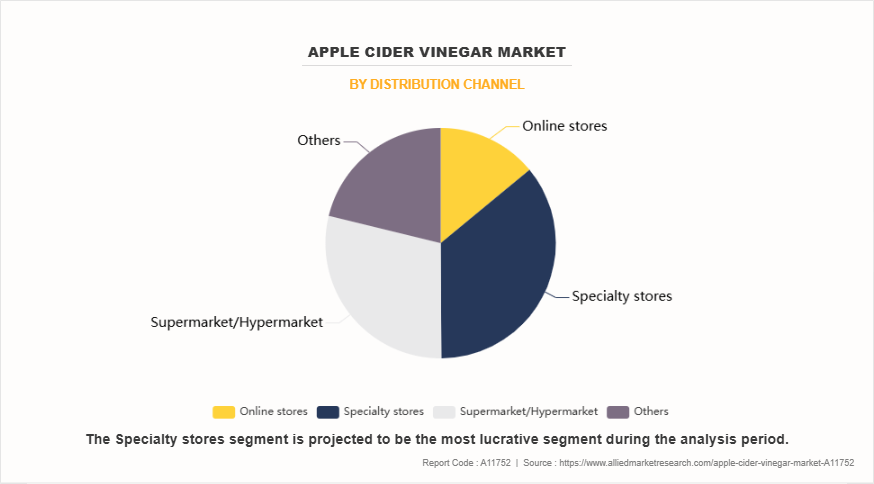
By distribution channel, specialty stores accounted for the largest share of the apple cider vinegar market size in 2024, as it caters to consumers seeking premium, organic, and health-oriented apple cider vinegar products. Their curated offerings and knowledgeable staff enhance consumer trust and support stronger sales.
By Region
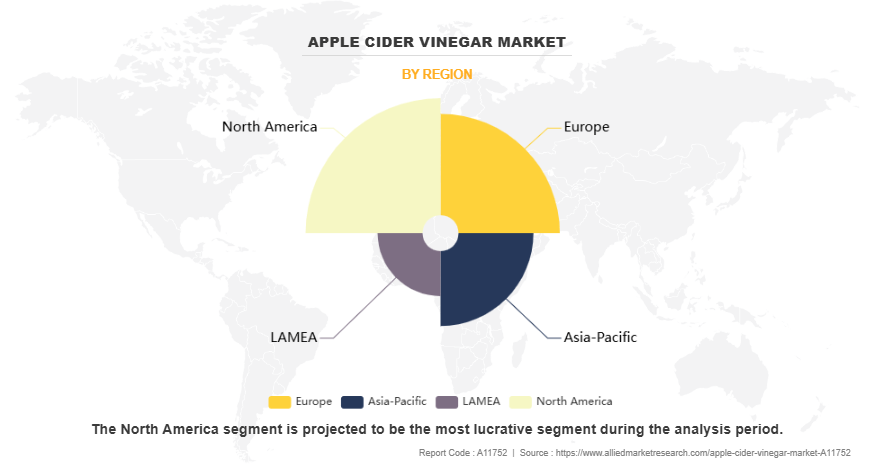
North America remains dominant in the apple cider vinegar market due to strong consumer awareness of health, wellness, and functional nutrition trends. The region has a well-established culture of adopting natural remedies, digestive health products, and clean-label ingredients, which supports consistent ACV demand. Wide product availability across supermarkets, specialty health stores, and highly developed e-commerce platforms further boosts market penetration. Additionally, strong influence from social media, nutrition influencers, and wellness brands accelerates product adoption. North America also hosts several leading ACV manufacturers, enabling continuous innovation in formats like gummies, drinks, and supplements, which strengthens its overall market leadership.
Key Benefits For Stakeholders
- This report provides a quantitative analysis of the market segments, current trends, estimations, and dynamics of the apple cider vinegar market analysis from 2024 to 2034 to identify the prevailing apple cider vinegar market opportunities.
- The apple cider vinegar market research is offered along with information related to key drivers, restraints, and opportunities.
- Porter's five forces analysis highlights the potency of buyers and suppliers to enable stakeholders make profit-oriented business decisions and strengthen their supplier-buyer network.
- In-depth analysis of the apple cider vinegar market segmentation assists to determine the prevailing market opportunities.
- Major countries in each region are mapped according to their revenue contribution to the global market.
- Market player positioning facilitates benchmarking and provides a clear understanding of the present position of the market players.
- The report includes the analysis of the regional as well as global apple cider vinegar market trends, key players, market segments, application areas, and market growth strategies.
Apple Cider Vinegar Market Report Highlights
| Aspects | Details |
 Market Size By 2034 | USD 2.5 billion |
 Growth Rate | CAGR of 8.4% |
 Forecast period | 2024 - 2034 |
 Report Pages | 236 |
 By Source |
|
 By Form |
|
 By Distribution Channel |
|
 By Region |
|
 Key Market Players | Old Dutch Mustard Company, The Kraft Heinz Company, Pompeian, Inc., Dabur India Ltd, GNC Holdings, Inc., Barnes Natural, Castelo Alimentos S/A, PepsiCo, Inc., Marukan Vinegar, White House Foods Company |
The Apple Cider Vinegar market is projected to reach $2.5 billion by 2034.
Rising global demand for natural health and wellness products is boosting consumption of apple cider vinegar across functional foods, beverages, and dietary supplements. The market is shifting toward organic, unfiltered, flavored, and convenient formats (shots, gummies, drinks), supported by strong e-commerce growth worldwide.
The leading application of the Apple Cider Vinegar market is food and beverages, driven by its widespread use as a natural ingredient and health-focused additive.
North America
GNC Holdings, Inc. PepsiCo, Inc. Dabur India Ltd Barnes Natural Marukan Vinegar Pompeian, Inc. White House Foods Company The Kraft Heinz Company Castelo Alimentos S/A Old Dutch Mustard Company
Loading Table Of Content...
Loading Research Methodology...