
Conjunctivitis Market Research, 2033
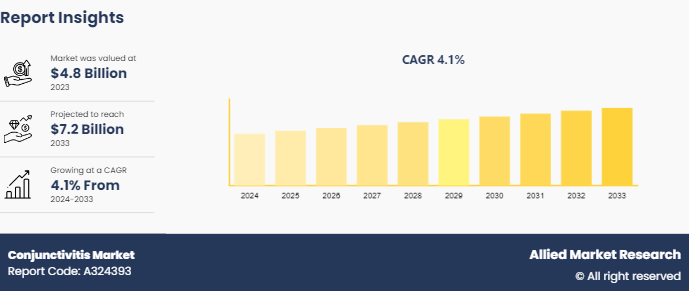
The global conjunctivitis market size was valued at $4.8 billion in 2023, and is projected to reach $7.2 billion by 2033, growing at a CAGR of 4.1% from 2024 to 2033. Growing prevalence of eye infections, increasing awareness regarding eye hygiene, and advancements in ophthalmic diagnostics and drug delivery systems are the major factors driving the conjunctivitis market growth.
Market Introduction and Definition
Conjunctivitis market refers to the comprehensive ecosystem of products, therapies, and diagnostic solutions focused on the prevention, diagnosis, and treatment of conjunctival inflammation, commonly known as pink eye. It encompasses a wide range of pharmaceutical products including antibiotic eye drops, antiviral medications, antihistamines, corticosteroids, lubricating drops, and combination therapies used across hospitals, ophthalmology clinics, and retail pharmacies. The market also includes diagnostic tools, point-of-care testing kits, and supportive care products designed to manage symptoms and prevent transmission.
The conjunctivitis market plays a significant role in maintaining ocular health and preventing complications associated with untreated infections or allergic reactions. It supports the management of various types of conjunctivitis, including bacterial, viral, and allergic forms, which may arise due to infections, environmental irritants, or immune responses. Technological advancements such as rapid diagnostic assays, improved ophthalmic drug formulations, and preservative-free eye drops have enhanced treatment accuracy, safety, and patient compliance. These innovations enable faster diagnosis, targeted therapy, and reduced risk of recurrence.
The market serves both therapeutic and preventive purposes, with increasing demand for over-the-counter eye care products and prescription medications. Rising incidence of seasonal allergies, growing exposure to environmental pollutants, expanding healthcare access, and increasing awareness about early treatment further contribute to market expansion. In addition, the integration of tele-ophthalmology services and digital health platforms strengthens clinical management and improves patient outcomes, supporting the overall growth and development of the conjunctivitis market globally.
Key Takeaways
- The conjunctivitis industry share study covers 20 countries. The research includes a segment analysis of each country in terms of value for the projected period.
- More than 1, 500 product literatures, industry releases, annual reports, and other such documents of major conjunctivitis treatment industry participants along with authentic industry journals, trade associations' releases, and government websites have been reviewed for generating high-value industry insights.
- The study integrated high-quality data, professional opinions and analysis, and critical independent perspectives. The research approach is intended to provide a balanced view of global markets and assist stakeholders in making educated decisions to achieve their most ambitious growth objectives.
Key Market Dynamics
The conjunctivitis market is evolving steadily, supported by increasing incidence of eye infections, rising awareness regarding eye hygiene, and advancements in ophthalmic therapeutics and diagnostics.
Drivers
Growing prevalence of bacterial, viral, and allergic conjunctivitis is one of the primary factors driving market growth. Increased exposure to environmental pollutants, allergens, and infectious agents, particularly in densely populated urban areas, significantly contributes to rising cases globally. Seasonal outbreaks, especially viral conjunctivitis, and higher transmission rates among school-going children and working populations further fuel demand for effective treatment options. In addition, improved awareness regarding early diagnosis and timely treatment encourages patients to seek medical care, supporting consistent demand for ophthalmic medications.
Rising adoption of over-the-counter (OTC) eye drops and prescription therapies also accelerates market expansion. Technological advancements in ophthalmic drug formulations, such as preservative-free drops, combination therapies, and sustained-release delivery systems, enhance patient compliance and treatment efficacy. Rapid diagnostic kits and point-of-care testing improve differentiation between bacterial and viral infections, enabling targeted treatment. Furthermore, expanding healthcare infrastructure, increasing access to pharmacies, and growth of e-commerce platforms for eye care products contribute to broader market reach.
Opportunities
Development of novel antiviral and anti-inflammatory therapies presents significant growth opportunities. Integration of tele-ophthalmology and digital consultation platforms improves remote diagnosis and prescription management. Growing demand for pediatric-friendly formulations and combination eye drops also creates avenues for innovation. In addition, increasing public health initiatives promoting eye hygiene and infection control support preventive care market expansion.
Restraints
Misdiagnosis between viral and bacterial conjunctivitis may lead to inappropriate antibiotic use, limiting optimal treatment outcomes. High dependency on self-medication and availability of low-cost generic products can restrict revenue growth for branded manufacturers. Additionally, limited awareness in underdeveloped regions and restricted access to ophthalmic specialists may hinder market growth during the forecast period.
Market Segmentation
The conjunctivitis market is segmented into type, disease type, end user, and region. On the basis of the type, the market is segmented into diagnosis and treatment. The diagnosis segment is further segmented into physical examination and laboratory tests. Treatment segment further classified into antibiotics, antiviral, anti-allergic, and artificial tears. On the basis of disease type, the market is divided into allergic conjunctivitis, bacterial conjunctivitis, and viral conjunctivitis. The allergic conjunctivitis segment was further categorized into seasonal allergic conjunctivitis and perennial allergic conjunctivitis. By end user, the market is classified into hospitals and clinics, specialty eye clinics, and others. By region, it is analyzed across North America, Europe, Asia-Pacific, and LAMEA.
Regional/Country Market Outlook
North America leads with a significant conjunctivitis market share, driven by high healthcare infrastructure, rise in prevalence of eye diseases, high awareness, and significant R&D investments. In addition, a strong awareness of eye health among the population, prompting timely medical consultations and adherence to treatment protocols which supports the market growth. The presence of leading pharmaceutical companies and active research and development activities contribute to the availability of innovative treatments and therapies thereby fueling market growth.
The Asia-Pacific region, particularly countries such as China and India, offers significant opportunities due to increasing healthcare expenditure, and rising prevalence of allergic conjunctivitis treatment due to pollution and environmental changes drive market expansion. In addition, the rise in incidence rates of allergic conjunctivitis treatment, presence of a large patient pool and expanding middle-class population in these countries presents a substantial market opportunity for pharmaceutical companies and healthcare providers to cater to the growing demand for eye health solutions which contributes towards the market growth.
Industry Trends
- In 2023, in India, the Government of National Capital Territory Delhi issued an advisory for schools and students on conjunctivitis treatment prevention and management. The advisory outlines the dos and don'ts, such as avoiding sharing personal items, maintaining good hygiene, and seeking medical attention if symptoms develop. This heightened awareness spurred sales of over-the-counter treatments and prescription medications as precautionary measures. Thus, increased emphasis on hygiene and early treatment could have led to more frequent purchases of disinfectants and medical consultations, which is contributing to market expansion.
- An article published by National Center for Biotechnology and Information (NCBI) in 2023, in India the government initiated immediate public health campaigns in affected areas to raise awareness about conjunctivitis treatment, its symptoms, and prevention measures. These campaigns aimed to educate the public about proper handwashing techniques and personal hygiene to prevent the spread of conjunctivitis treatment. Thus, rise in awareness about conjunctivitis propels market growth.
Key End-User Segments Fueling Market Growth
The conjunctivitis market is driven by several primary end users. Hospitals represent a major end-user segment, serving as key centers for the diagnosis and treatment of moderate to severe conjunctivitis cases. These facilities manage infectious outbreaks, neonatal conjunctivitis, and cases associated with systemic conditions that require comprehensive evaluation. Access to advanced diagnostic tools, laboratory testing, and specialized ophthalmology departments supports accurate differentiation between bacterial, viral, and allergic conjunctivitis, driving demand for prescription medications and targeted therapies.
Ophthalmology clinics and specialized eye care centers constitute another significant segment. These clinics handle a high volume of outpatient visits for routine eye examinations and acute conjunctival infections. Ophthalmologists and optometrists rely on slit-lamp examinations, rapid diagnostic kits, and a wide range of ophthalmic formulations, including antibiotics, antihistamines, corticosteroids, and lubricating drops. The growing preference for early consultation and specialized care continues to strengthen this segment’s contribution to market growth.
Retail pharmacies and online pharmacies also play a crucial role, particularly in the distribution of over-the-counter (OTC) eye drops and supportive care products. Increasing consumer awareness and demand for convenient access to treatment have expanded the role of e-commerce platforms in eye care product sales. Academic institutions and research centers further contribute by supporting clinical research and development of innovative drug delivery systems.
Patent Analysis for Conjunctivitis, By Country 2021-2024 (%)
According to the World Intellectual Property Organization (WIPO) , from 2021 to 2024, patent filings related to conjunctivitis show a varied landscape of innovation across different countries. China leads with 91 patents, indicating a strong focus on research and development within its pharmaceutical and biotechnology sectors. The U.S. follows with 44 patents, reflecting significant activity in the development of new treatments and diagnostic tools for conjunctivitis. The Patent Cooperation Treaty (PCT) filings total 31, illustrating a considerable level of international collaboration and interest. The European Patent Office (EPO) has 22 patents, highlighting ongoing efforts within Europe to address conjunctivitis. Japan, with 11 patents, represents a smaller but notable contribution, while India and Denmark contribute 10 and 8 patents, respectively. The others category accounts for 22 patents, encompassing various other countries engaged in this field. This patent distribution emphasize a global commitment to advancing conjunctivitis care. The high number of patents in China suggests it is a major hub for innovation, which, combined with substantial contributions from the U.S. and Europe, indicates a competitive and dynamic market for conjunctivitis treatments. This competitive landscape is likely to drive advancements in therapies and diagnostic methods, addressing the needs of patients worldwide.

Impact of Evolving Consumer Preferences on Conjunctivitis Market Trends
Consumer preferences are playing a pivotal role in reshaping trends within the conjunctivitis market. One of the most notable shifts is the growing demand for fast-acting and easily accessible treatment options. Patients increasingly prefer over-the-counter (OTC) eye drops, combination formulations, and preservative-free products that provide rapid symptom relief from redness, itching, and irritation. Rising awareness about eye hygiene and infection control has expanded the market beyond prescription therapies to include preventive and supportive eye care solutions.
Consumers are also prioritizing convenience and safety in eye care management. There is increasing demand for tele-ophthalmology consultations, online pharmacy access, and home delivery of ophthalmic medications. Easy appointment scheduling, digital prescriptions, and clear product labeling influence purchasing decisions. Additionally, preservative-free, pediatric-friendly, and sensitive-eye formulations are gaining popularity due to concerns about long-term ocular surface health and side effects.
Another key trend is the preference for preventive and self-care approaches. Individuals are more proactive about avoiding eye infections through hygiene practices, protective eyewear, and early symptom management. Digital health platforms, virtual consultations, and electronic medical records further enhance accessibility and continuity of care. Collectively, these evolving preferences continue to influence product innovation, distribution strategies, and patient-centered service models across the global conjunctivitis market.
Competitive Landscape
The major players operating in the conjunctivitis market include AbbVie Inc., Ajanta Pharma Limited, AFT Pharmaceuticals, Alembic Pharmaceuticals Ltd, Bausch Health Companies Inc, Cipla, Inc., Grevis Pharmaceutical Private Limited, Indoco Remedies Ltd., Johnson & Johnson Services Inc, and Novartis AG.? Other players in the conjunctivitis market include Ocular Therapeutics, Inc., Santen Pharmaceuticals Co. Ltd., Spectra Vision Care Pvt. Ltd, Sun Pharmaceuticals Industries Ltd, and Teva Pharmaceutical Industries Ltd.
Leading Companies and Strategic Initiatives Shaping the Conjunctivitis Market
The key players operating in the conjunctivitis market maintain strong market positions through diversified ophthalmic portfolios, extensive distribution networks, and continuous focus on research and development.
A central strategy among leading firms is innovation in ophthalmic drug formulations and delivery systems. Companies are increasingly investing in preservative-free eye drops, combination therapies, antiviral and anti-inflammatory solutions, and sustained-release formulations to improve patient compliance and therapeutic outcomes. Advanced diagnostics and rapid point-of-care testing integration are also prioritized to enhance treatment precision.
Strategic acquisitions, collaborations, and partnerships are widely adopted to expand geographic presence and product capabilities. Several companies are entering emerging markets to leverage growing awareness of eye health and increasing demand for over-the-counter and prescription treatments. Regulatory approvals, clinical trials, and introduction of generic formulations support affordability and accessibility, while digital engagement platforms enhance patient education and tele-ophthalmology services.
Recent Key Strategies and Developments in Conjunctivitis Industry
In March 2022, Johnson & Johnson received approval for ACUVUE Theravision with Ketotifen (etafilcon A drug-eluting contact lens with ketotifen), it is useful to help lens wearers suffering from allergic eye itch.
Key Sources Referred
- National Center for Biotechnology and Information (NCBI)
- Centers for Medicare & Medicaid Services (CMS)
- National Health Service (NHS)
- Australian Government Department of Health and Aged Care
- Government of Canada's Health and Wellness
- Ministry of Health and Family Welfare (MoHFW)
- National Health Mission (NHM)
- Ayushman Bharat - Health and Wellness Centres (AB-HWCs)
- Centers for Disease Control and Prevention (CDC)
- Food and Drug Administration (FDA)
- National Institutes of Health (NIH)
- World Health Organization (WHO)
Key Benefits for Stakeholders
- This report provides a quantitative analysis of the market segments, current trends, estimations, and dynamics of the conjunctivitis industry analysis from 2024 to 2033 to identify the prevailing conjunctivitis industry opportunities.
- The conjunctivitis market research is offered along with information related to key drivers, restraints, and opportunities.
- Porter's five forces analysis highlights the potency of buyers and suppliers to enable stakeholders make profit-oriented business decisions and strengthen their supplier-buyer network.
- In-depth analysis of the conjunctivitis market segmentation assists to determine the prevailing market opportunities.
- Major countries in each region are mapped according to their revenue contribution to the global market.
- Market player positioning facilitates benchmarking and provides a clear understanding of the present position of market players.
- The report includes the analysis of the regional as well as global conjunctivitis market trends, key players, market segments, application areas, and market growth strategies.
Conjunctivitis Market , by Type Report Highlights
| Aspects | Details |
 Market Size By 2033 | USD 7.2 Billion |
 Growth Rate | CAGR of 4.1% |
 Forecast period | 2024 - 2033 |
 Report Pages | 228 |
 By Type |
|
 By Disease Type |
|
 By End User |
|
 By Region |
|
 Key Market Players | Johnson & Johnson Services Inc, Grevis Pharmaceutical Private Limited, Teva Pharmaceutical Industries Ltd, Cipla, Inc., Ocular Therapeutics, Inc, Bausch Health Companies Inc, AFT Pharmaceuticals, Spectra Vision Care Pvt. Ltd, Jabs Biotech Pvt. Ltd., Alembic Pharmaceuticals Ltd |
The total market value of conjunctivitis market is $4.8 billion in 2023.
The forecast period in the report is from 2024 to 2033.
The key trends in the conjunctivitis market are increasing prevalence of allergic conjunctivitis and rise in exposure to allergens.
Factors include increasing prevalence of eye infections, advancements in diagnostic and treatment options, and rising awareness about eye health.
The market value of conjunctivitis market in 2033 is $7.2 billion.
North America is the largest regional market for conjunctivitis.
Conjunctivitis, commonly known as pink eye, is an inflammation of the conjunctiva, the membrane that lines the eyelid and covers the white part of the eyeball.
Loading Table Of Content...